Gustave Flaubert and Maxime du Camp
By Field and Shore: Brittany (‘Par Les Champs et Par Les Grèves : Bretagne’, 1847)
Part IV, Chapters X-XII
Translated by A. S. Kline © Copyright 2026 All Rights Reserved
This work may be freely reproduced, stored and transmitted, electronically or otherwise, for any non-commercial purpose.
Conditions and Exceptions apply.
Contents
- Chapter X (Du Camp: The North Coast, Morlaix to St. Malo)
- Chapter XI: (Flaubert: St. Malo to Rennes)
- Chapter XII: (Du Camp and Flaubert: The Return, Rennes to La Bouille, near Rouen.)
Chapter X (Du Camp: The North Coast, Morlaix to St. Malo)
Morlaix. — The canal, a wooden gallery below the houses, the perspective comprised of houses in narrow streets, roofs, shopfronts, beams, black in colour, clothes hanging on the ground floor. — It was market day; the peculiar fabric of men’s jackets, a yellowish background with uneven brown streaks, like chocolate stains; another material used for the trousers, a white background with blue and brown streaks. — Moutard firing a rifle using a billiard cue. — A tobacco factory; the piles of tobacco look like heaps of seaweed; tobacco; stupid machines; bins full of tobacco. One could go mad there, all the men who work there are pallid.
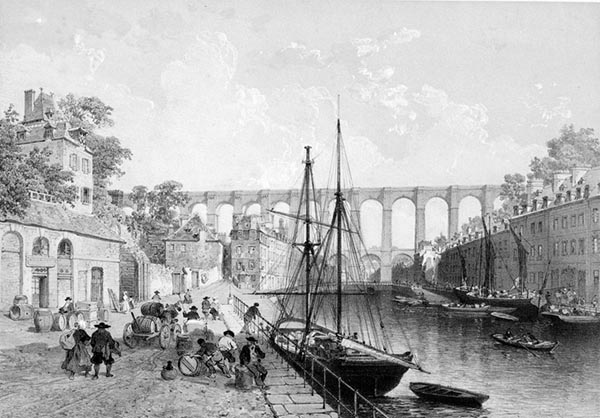
‘Morlaix: the Railway Viaduct and the Head of the Harbour’ - Félix Benoist (French, 1818–1896) and Adolphe Jean-Baptiste Bayot (French, 1810–1871)
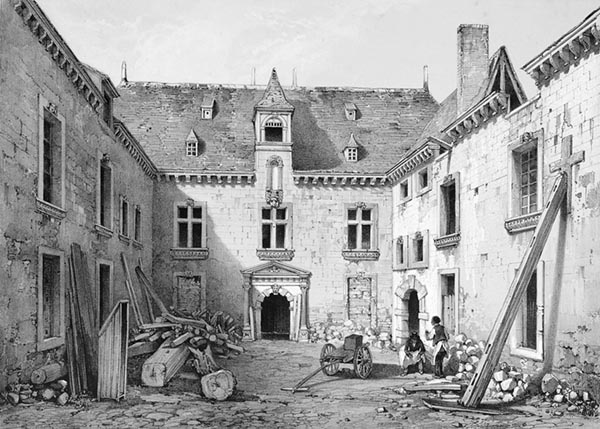
‘The Hôtel de Ville, Morlaix’ - Auguste Étienne François Mayer (French, 1805–1890)
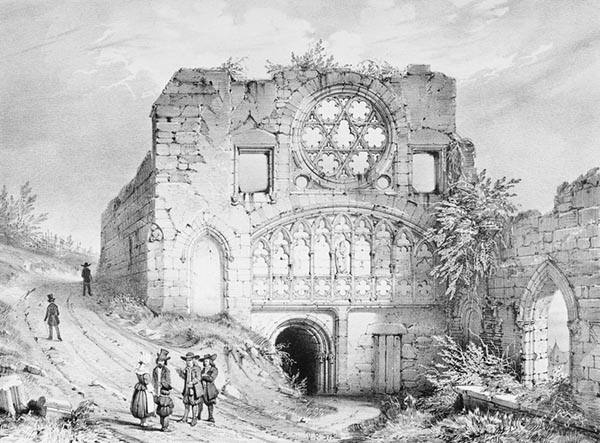
‘The Carmelite Convent, Morlaix’ - Auguste Étienne François Mayer (French, 1805–1890)
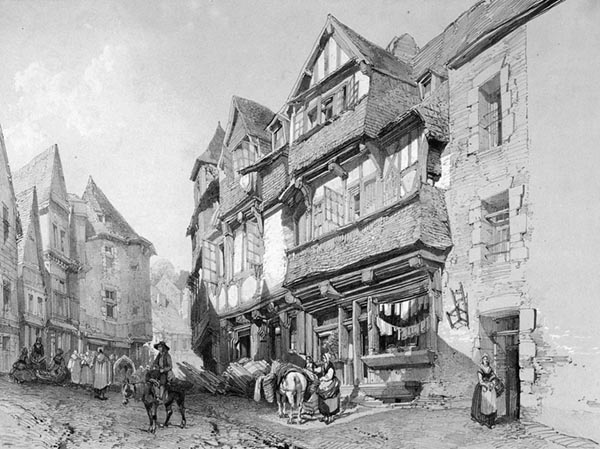
‘Morlaix’ - Eugène Cicéri (French, 1813–1890)
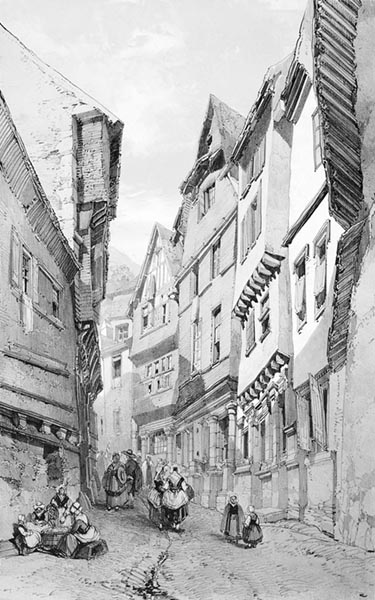
‘Morlaix’ - Eugène Cicéri (French, 1813–1890)
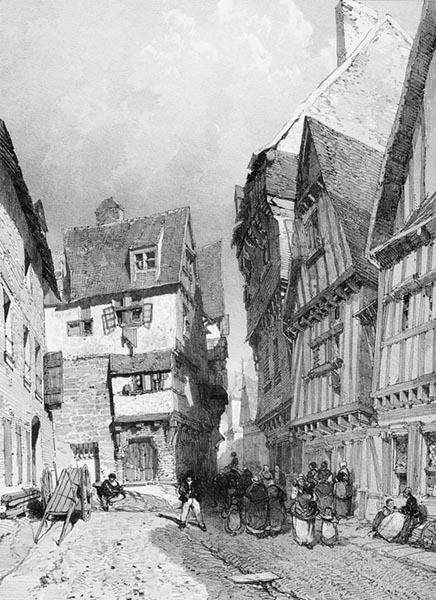
‘A Street in Morlaix’ - Eugène Cicéri (French, 1813–1890)
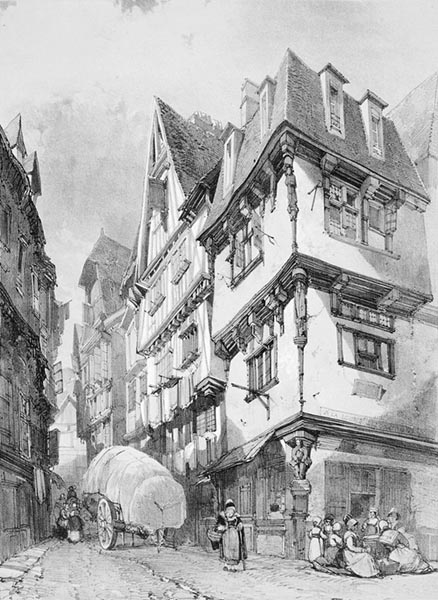
‘Morlaix’ - Eugène Cicéri (French, 1813–1890)
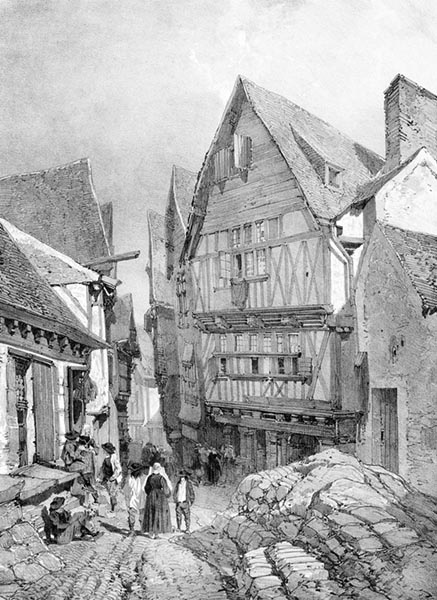
‘A Street in Morlaix’ - Eugène Cicéri (French, 1813–1890)
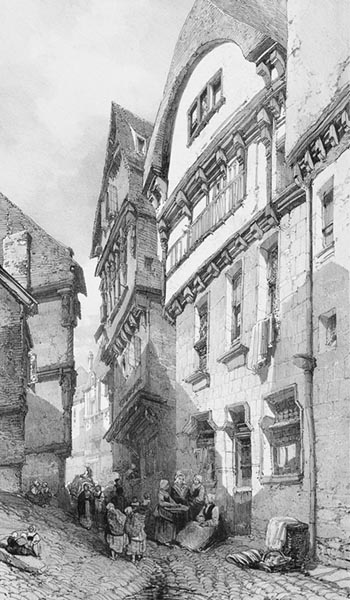
‘A Street in Morlaix’ - Eugène Cicéri (French, 1813–1890)
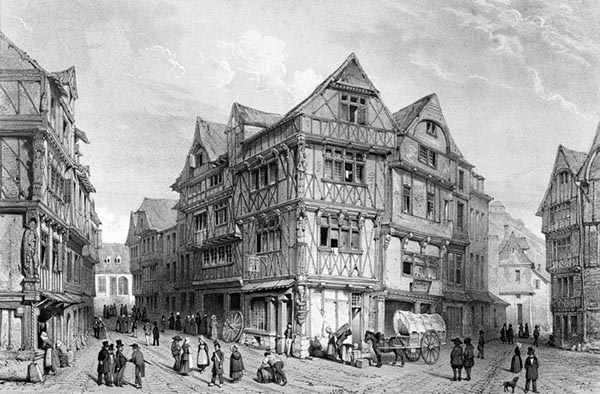
‘Le Pavé, Morlaix’ - Auguste Étienne François Mayer (French, 1805–1890)
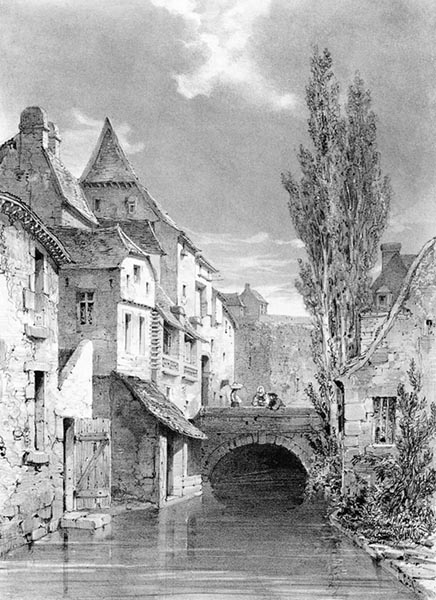
‘The Porte Bourrette, Morlaix’ - Auguste Étienne François Mayer (French, 1805–1890)
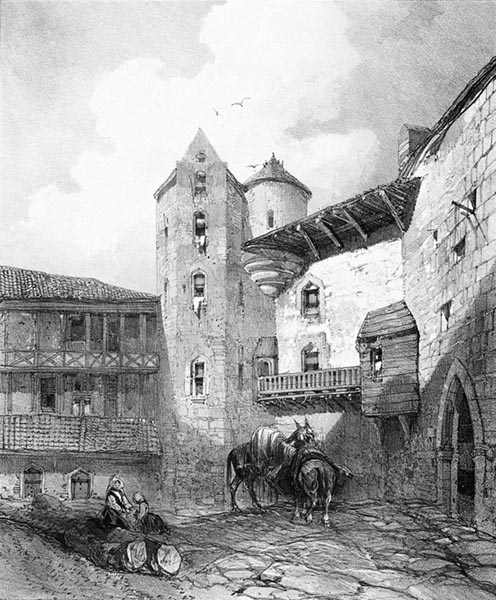
‘The Tower of a House, Morlaix’ - Eugène Cicéri (French, 1813–1890)
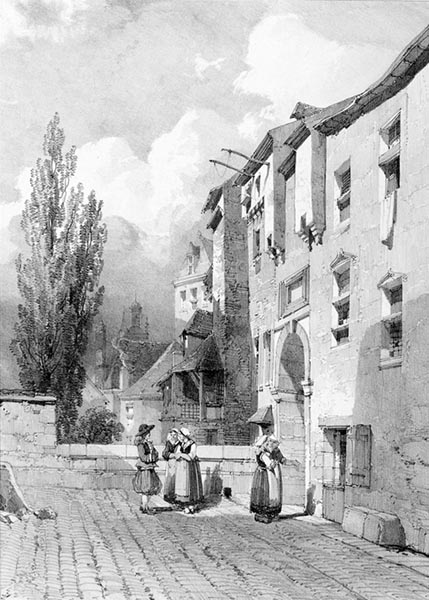
‘The House where General Moreau was Born, Morlaix’ - Eugène Cicéri (French, 1813–1890)
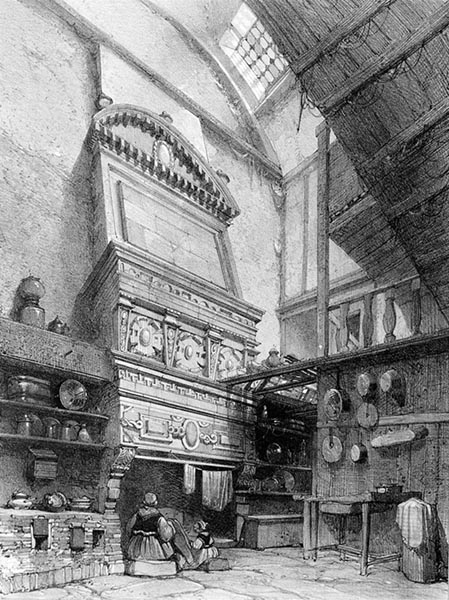
‘Sous les Lances, Morlaix’ - Eugène Cicéri (French, 1813–1890)
The whole region here seems richer, thus the clothes become uglier, the faces less vigorous; no more of the vigorous and intense expressions seen in Quimperlé or even Quimper. (Morlaix, July 4th, 10 a.m.)
Huelgoat. — On a rise, in a hollow, between wooded hillsides, among rocks similar to those seen in the Fontainebleau forest; a pond to the right as you arrive. — A conversation we had about love and the meaning of the word ‘curiosity’ stirred a lot of sediment at the bottom of the barrel ... and then the sun, drying the mud and bringing out the insects that had been hidden there! — A little canal, a stroll along its bank. The steep bank was covered in brambles; foxgloves were mirrored in the water, charming woods, tall slender trees, slopes, gaps beneath the trunks; the water meandering. — Trou de Re-ahès (the Witches’ Hole) about 25 feet deep, a rather sinister place indeed, our lengthy savouring of its calm and secluded nature. Huelgoat is a hole where one chooses to live when one is sad, sorrow there would doubtless turn to melancholy. — This morning, the mine; no way to visit! The mud from which silver is extracted. The evening before and this very morning, we had talked excessively about money! — At the Tour d’Argent Inn, engravings of the Tour de Nesle.
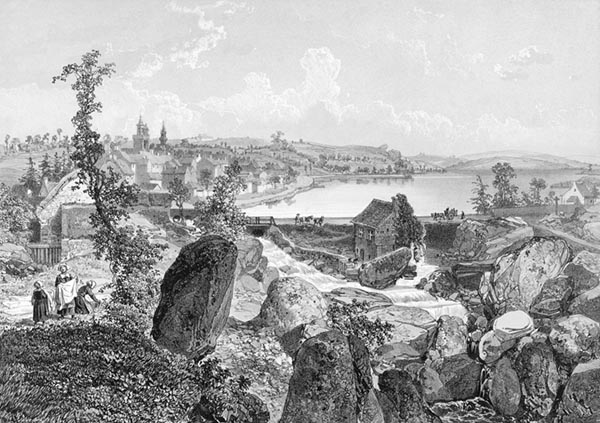
‘Huelgoat: General View’ - Félix Benoist (French, 1818–1896)
From Huelgoat to Carhaix (Carhaix-Plouger), the road climbs and descends endlessly; for three hundred yards it winds beneath tall trees. A vast landscape, its contoured lines superimposed on one another, black and dark blue; a wide open countryside. Before reaching Huelgoat, however, there are starkly arid sections, a jagged mountain peak; the heath is dry, the colour of old, dried moss, reminiscent of Spain. At the top of each climb today, a new landscape unfolded, the vista narrowing and vanishing as we descended.
Carhaix. — Deserted, sad, the plaster crumbling from the houses, the wooden beams turning to dust. The town hall with its saint would do well as a shabby cabaret-restaurant on the Rue Mouffetard (Paris). — In one street, a house of slate and red wood, its colour vibrant thanks to the russet and green moss that has clung to the slate walls. — A statue of La Tour d’Auvergne (Théophile Malo Corret de la Tour d’Auvergne, named by Napoleon as the ‘first grenadier of France’, who was born in Carhaix) by Carlo Marochetti: a handsome head, heavy legs, the foolish look produced by a rifle leaning against a bearskin hat at the rear of the figure; the bas-reliefs are quite lively, but heavy. It’s an apathetic form of sculpture. — The cemetery: boxes containing heads, like those at Quiberon, appear: ‘Here lies the head of ...’; at Saint-Pol, moreover, we saw a few; only one notable one here, whose owner was unknown, completely surrounded by honeysuckle; the tombs of three notaries, and a box containing the head of another notary.
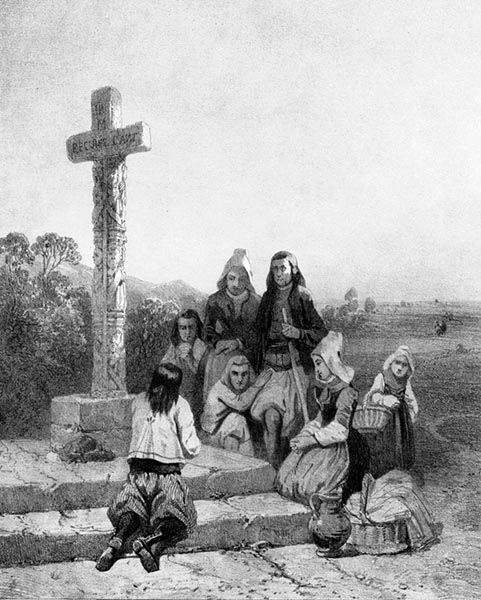
‘The Cross of Saint Tromeur, Carhaix’ - Eugène Cicéri (French, 1813–1890)
It is customary to paint funereal landscapes on the wood of crosses, showing a pyramid, a mausoleum, a column, or a tomb in the countryside. There was a beautiful black cross with gold orbs at the three ends which, at the point where the arms intersected, depicted a splendid tomb: Saint Helen, shaded by a weeping willow, a dishevelled mourner; the countryside desolate; in the background, mountains like waves; in the middle-ground, rows of grass and, above, pink clouds. Such is the rule moreover; everywhere the clouds are pink, the difference lying only in the degree of vividness of the hue. The good man is there with his wife. ‘Pray for their rest’; they must be snoring loudly and rotting grossly not to be woken down there. Poor old notary, departed! — The cemetery is in front of the church (Saint-Pierre): a carved wooden door; the saint, inside the church, still has his head! A huge holy water font, a hideous Saint Michael, a very full-breasted virgin; another large crown, a truly pretty figure as if from a fashion plate; a wooden statuette, an Eskimo Magdalene; an enormous spread of hair, dense and puffed-up, covers her whole body down to her feet like a garment made of animal fur; it is of an unheard-of vigour and crudity, the woman beneath has the animal tepidity of the stables.
A dreadful carriage journey from Carhaix to Guingamp. — Our driver; a widowed woman who is a friend of the driver; they ate nuts and bread together…
Guingamp. — A Pardon had been performed: the saints in the church porch were all crowned with flowers, candles, grass and turf, ivy; their blackened heads had a strange animation. In the background, the Virgin with her bronzed face, all adorned, in a flowing white satin gown; in the square, shops; at the back, two traveling showmen’s booths, one where feats of strength and horsemanship were performed, in which the torments of the persecution of 150 were represented, and the other which was of rope-dancers; on the left, in front, the musicians in military uniforms, all passive and obliging figures, and a clown in a blue coat with red lapels who played the drum; on the right, the actors lined up: a woman of forty, thin, the mother; a woman of thirty, with three children, standing in an arched pose, poised, one leg forward, in a velvet spencer and a white dress with gold sequins, a young girl of fourteen, Mariette, black hair in two braids behind, low forehead, raised black eyebrows, vigorous, darting eyes; the advance of the modern woman; P…, the father, a frock-coat over his shirt, a medal on his chest, skullcap on his head; An Italian from Venice, he spoke, played the trumpet, the violin, and did feats of strength: rope-dances, horse jumping, exercises with rings. A Cachucha (Spanish dance), Mariette returned dressed as a Spaniard; the national polka, a pantomime, Pierrot, Mariette as a man: white trousers, large black hat, small jacket, moustache.
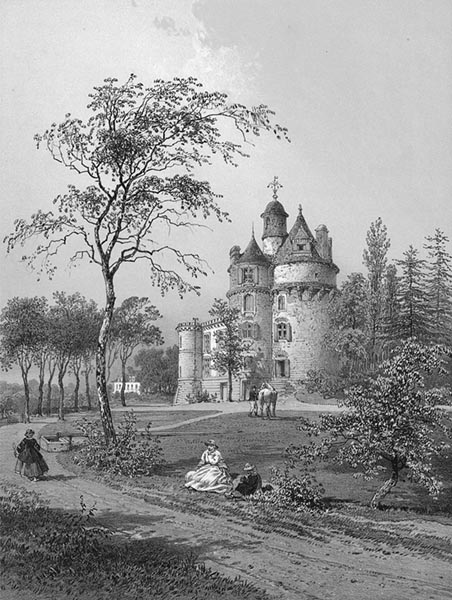
‘The Château du Bois de la Roche, near Guingamp’ - Félix Benoist (French, 1818–1896), Eugène Cicéri (French, 1813–1890) and Adolphe Jean-Baptiste Bayot (French, 1810–1871)
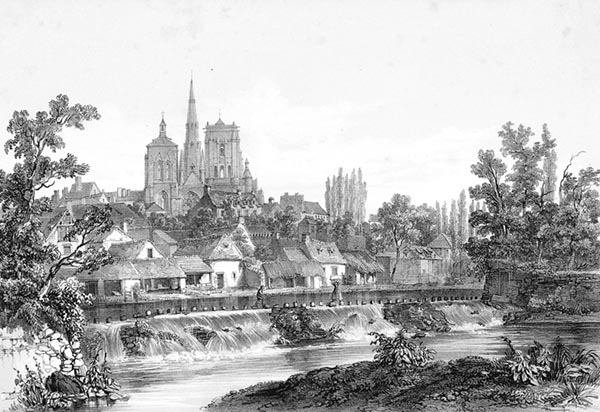
‘At Guingamp’ - Félix Benoist (French, 1818–1896)
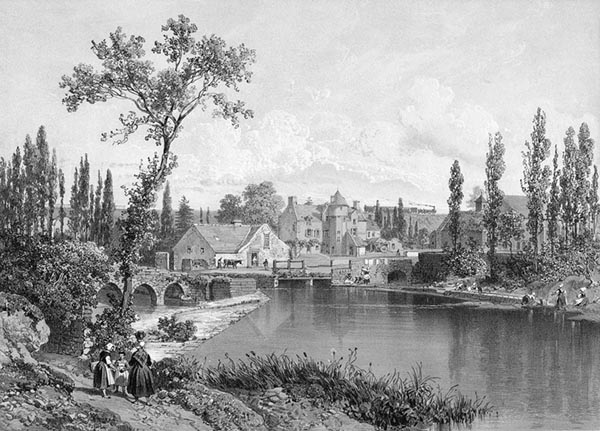
‘Sainte-Croix Abbey, near Guingamp’ - Adolphe Jean-Baptiste Bayot (French, 1810–1871) and Félix Benoist (French, 1818–1896)
Saint-Brieuc. — Nothing. — The Tour de Cesson (late fourteenth century, ruined), a skull-like pile overlooking the sea; fragments of staircases and remains of windows are still visible. — A well-nigh vertical descent on slippery grass, a passage, sand, mudflats, a track over shells at the edge of the sea; it was low tide. — We re-ascended. — The wheat reached right up to the edge of the cliff.
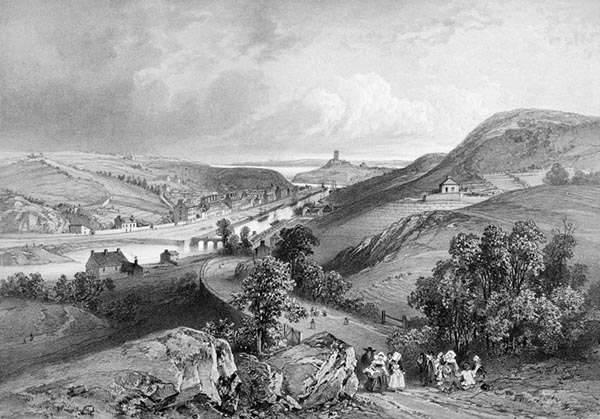
‘The Port du Légué, near Saint-Brieuc’ - Félix Benoist (French, 1818–1896) and Adolphe Jean-Baptiste Bayot (French, 1810–1871)
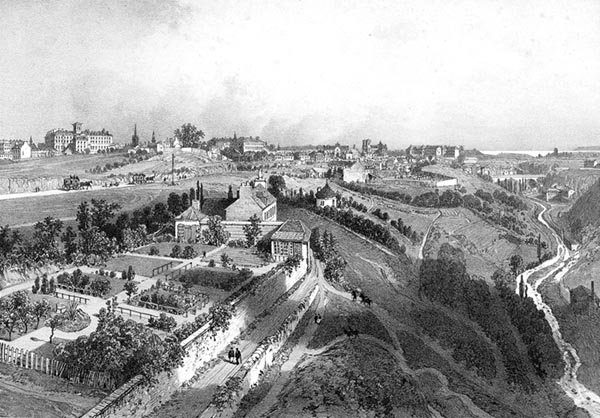
‘Saint-Brieuc: View from the Railway Viaduct’ - Félix Benoist (French, 1818–1896) and Eugène Cicéri (French, 1813–1890)
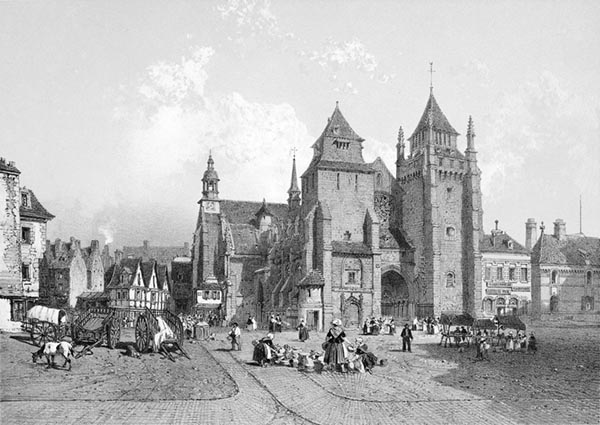
‘Saint-Brieuc Cathedral’ - Félix Benoist (French, 1818–1896), Adolphe Jean-Baptiste Bayot (French, 1810–1871) and Eugène Cicéri (French, 1813–1890)
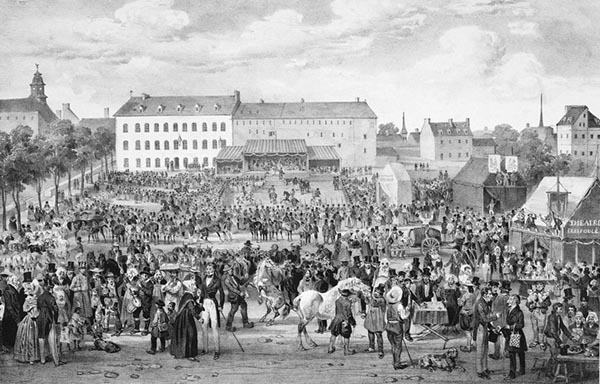
‘The Race Fair, Saint-Brieuc’ - Adolphe Jean-Baptiste Bayot (French, 1810–1871)
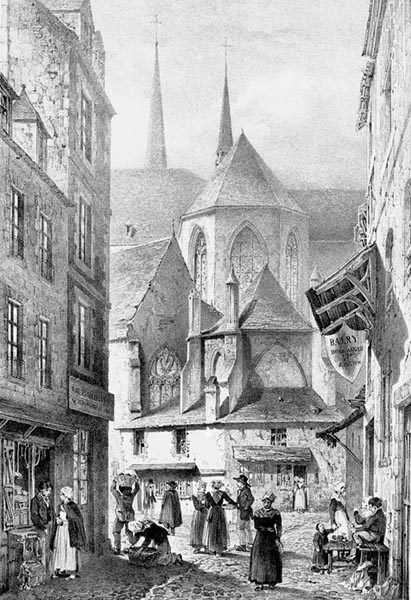
‘Saint-Brieuc’ - Adolphe Jean-Baptiste Bayot (French, 1810–1871)
Pléven. — Dreadful amount of noise from a child in a tavern where we went to drink beer. — In the cemetery, the old tomb of a heavily-armoured warrior; his curly hair looks like a bouquet of roses on his forehead and falls in two curls over his shoulders; at his feet, his dog, the head broken away. — Tall grass in this cemetery, they were mowing, the man passing his scythe over it was watching us. — Our guide’s expression.
Lamballe (Lamballe-Armor). — The church on the hill (Église Saint-Martin); marred by hideous black paint obscuring a thousand fine details; two curious tombs. — A stud farm; the effect of human beings alongside animals; the entirely passive role of the mare who makes not a sound. ‘The more a mare is in heat, the less she moves,’ our old stable-boy used to tell us, it being the opposite with us. If a man is less handsome than that stallion, on the other hand, the human ensemble is superior; woman is more colourful in her movements than a mare. But what a weapon! Like a mushroom. Withdrawing it, slowly, with a movement full of melancholy, the stallion smears his legs. Well-nigh savage cries from the stable, scenting the mares. Red jackets of the boys, the agent, the country folk, the rest of us, it formed a ready-made picture. There are ready-made pictures everywhere, are there not? It’s simply a matter of recognising them.
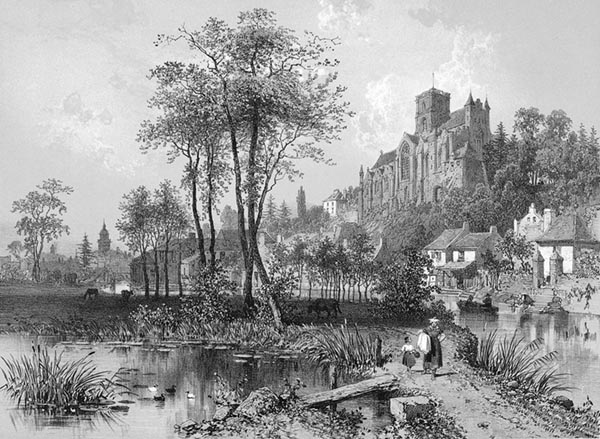
‘Lamballe’ - Félix Benoist (French, 1818–1896) and Eugène Cicéri (French, 1813–1890)
Dinan. — The basilica of Saint-Sauveur, the portal, a triple semicircular arch; the two side arcades each have a twisted column at the rear corner; in each of these arcades, two mutilated and unrecognisable statues, with large animals, lions or dogs, on which their feet rest; the crown above of one of these statues (on the right) represents a lamb carrying a cross. — The column capitals depict various subjects: a woman tormented by a toad and a devil, the toad below climbing up her thighs and biting her breast; a stork drinking from a vase; a seated man with a chain around his neck from which hangs a ball and chain that falls between his thighs; devoured by two devils with bulls’ heads. — At the base of the pinnacle above, a winged lion and a winged ox. — The heavy pinnacle, pierced by an enormous pointed window of ugly appearance. — On a capital, an old man with a long beard, carrying a staff from the end of which hangs a ball (a pot?), consulting a chimera. — The granite holy-water font more than three feet in diameter, two fish carved inside; on the outside, two men and two women: two hold the bowl on their stomachs, the two others are upside down; the heads are gone, the sexes are distinguishable only by the feet; the women’s garments extend below, while the men’s legs are visible; little water in the holy-water font. — A single aisle, in good Gothic style. The right side of the nave (the nave aisle is missing) is adorned with Romanesque windows with two columns crowned by flat volutes. A small pointed-arch chapel pierces the building on this side. — The nave of a remarkable purity; the colonnettes that terminate the spring of the vault’s ribs, instead of being rounded as they continue from the gallery, are square. — The marble plaque of Bertrand du Guesclin (the ‘Eagle of Brittany’, Constable of France under Charles V; the upright wall-tomb contains his heart), called Dugucaquin — In one of the side chapels, a small carved stone painting has been set into the wall, depicting a tall, bearded, long-haired man standing (Saint Christopher?), wearing a robe with long sleeves and a wide, Judaic belt, walking on the waves, flanked on each side by small (biblical) trees on rocks; below, two children, one mounted on a lion, the other on an animal with the rump of a horse and the head of a dog, but a dog with what appeared to be a crocodile in its teeth. — On a Romanesque column capital, two camels meet; the one opposite (there are two columns at the entrance), coiled serpents and dragons.
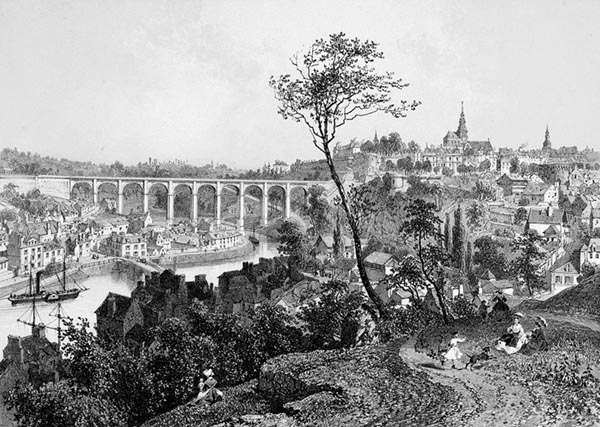
‘Dinan’ - Félix Benoist (French, 1818–1896), Eugène Cicéri (French, 1813–1890) and Adolphe Jean-Baptiste Bayot (French, 1810–1871)
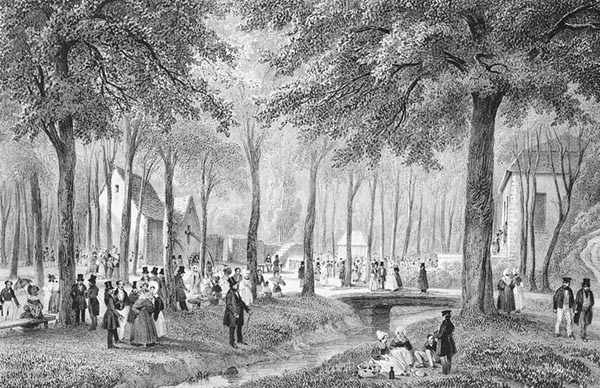
‘The Mineral-Water Fountain, Dinan’ - Adolphe Jean-Baptiste Bayot (French, 1810–1871)
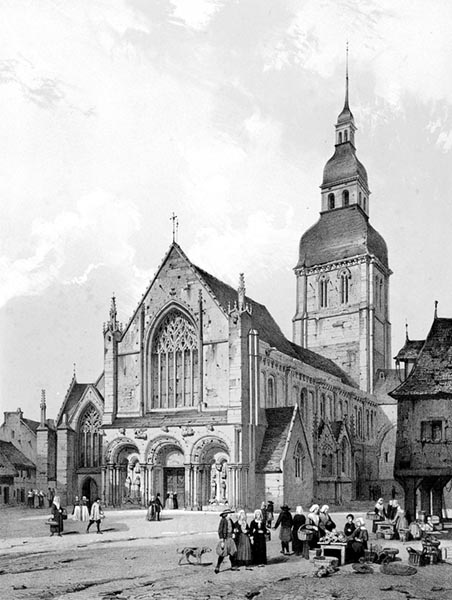
‘The Church of Saint-Sauveur, Dinan’ - Léon Gaucherel (French, 1816–1886)
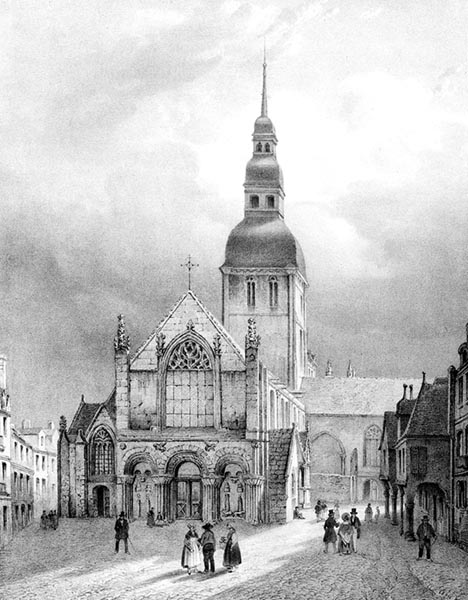
‘The Church of Saint-Sauveur, Dinan’ - Adolphe Jean-Baptiste Bayot (French, 1810–1871)
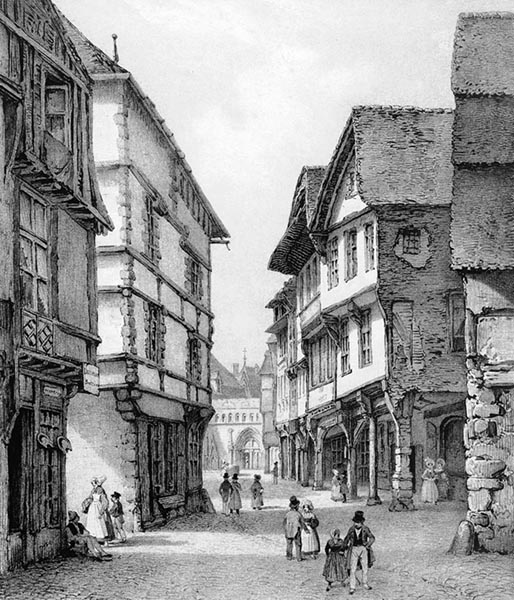
‘A Square in Dinan’ - Adolphe Jean-Baptiste Bayot (French, 1810–1871)
Prison towers, machicolations with trefoils and oblong squares at their base. — The view entirely wooded from the top of the tower. — Remains of ramparts. — Sloping streets, wooden houses with pointed roofs, receding perspective. — The Town Hall contains a museum.
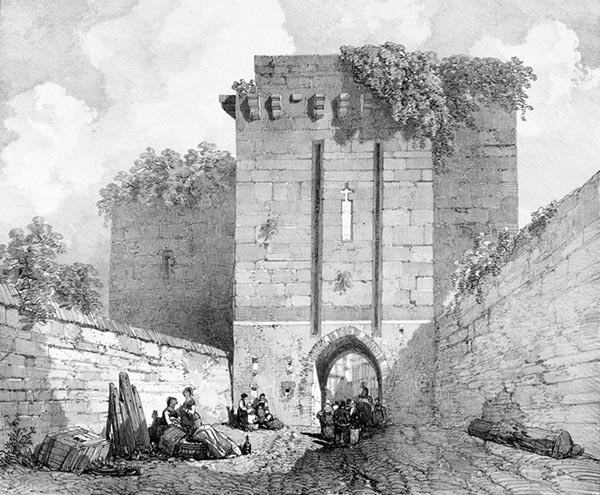
‘The Porte Saint-Malo, Dinan’ - Léon Gaucherel (French, 1816–1886) and Eugène Cicéri (French, 1813–1890)
Corseul. — A holy water font (in Église Saint-Pierre) similar to that of the Saint-Sauveur church, but smaller. — The upper tower. — The horse. — Stone facing aligned in the Roman style; conical construction, but the interior of the masonry does not appear to me to be Roman.
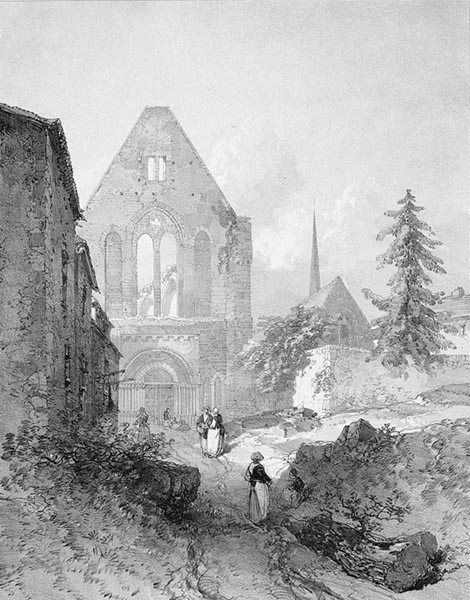
‘Léhon Abbey, near Dinan’ - Eugène Cicéri (French, 1813–1890) and Léon Gaucherel (French, 1816–1886)
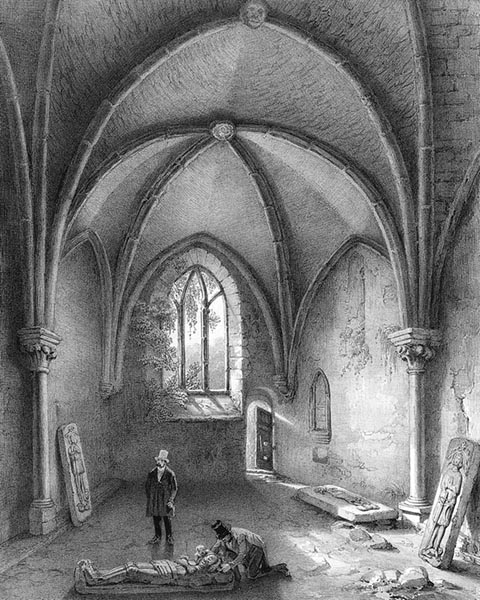
‘The Beaumanoir Chapel, Léhon’ - Adolphe Jean-Baptiste Bayot (French, 1810–1871)
Lehon (Dinan) — The old château, an enormous mound with a very steep path, entirely covered by beech trees; one can scarcely see the sparse fragments of masonry protruding from beneath the grass and undergrowth. — The Beaumanoir Chapel (in Saint-Magloire Abbey Church, Dinan, now restored), a large window at the far end through which one sees a completely wooded slope; a dark burial vault; a small column so green it resembled fine antique bronze. Through a pointed, half-ruined double window, a harsh, green light, a livid glow from the trees and leaves, especially on the left, the light entering at the right hand corner. — The cloister, roofless, square columns; over the top of which vines climb, a yellow cow ruminating on the grass. — The refectory filled with looms; windows with leaded frames; a special structure in the wall for the pulpit used for reading during meals. — Shameless and impudent young girls at the foot of the castle, ‘if you want to know, it’s to buy bread.’
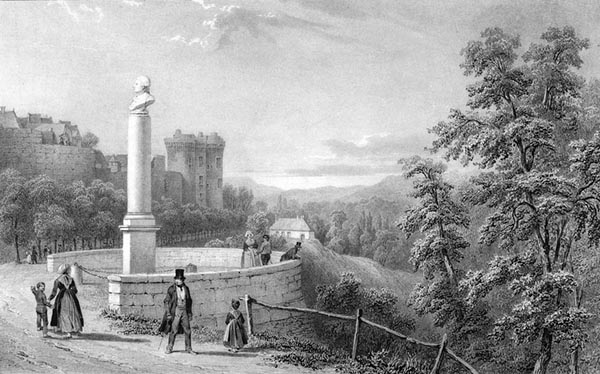
‘The Château de Dinan’ - Adolphe Jean-Baptiste Bayot (French, 1810–1871)
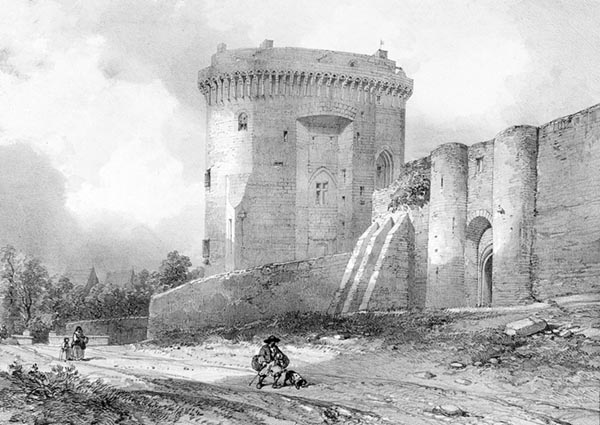
‘The Tour du Connétable, the Keep of Dinan’ - Léon Gaucherel (French, 1816–1886) and Eugène Cicéri (French, 1813–1890)
In the Town Hall Museum, a few tombs of the Beaumanoir family; but how things lose their impact when divorced from their natural context! Also a lock of Napoleon’s hair, La Tour d’Auvergne’s cartridge box, Louis XVI’s key, full-length portraits of Broussais (François-Joseph-Victor Broussais, the physician, born in St. Malo, who studied at the college in Dinan) in the formal costume of the Institute, and Du Guesclin; even in one of the upstairs rooms a small portrait of Du Guesclin, then there’s Du Guesclin Square with his statue, a Café Du Guesclin, the Hôtel Du Guesclin. Towns where great men were born either fail to recognise their worth, misuse their names deplorably, or completely forget them. —
The effect of the landscape from the top of the ramparts, spoiled, as at La Roche-Bernard, by the bridge being constructed. — The much-vaunted Rance is only beautiful at its mouth, where, suddenly widening as it joins the sea, one can see Saint-Servan and all the rocks surrounding Saint-Malo. On the banks, small rocks dot the landscape, but the overall effect is neither gentle nor rugged; lacking any distinctive character.
Chapter XI: (Flaubert: St. Malo to Rennes)
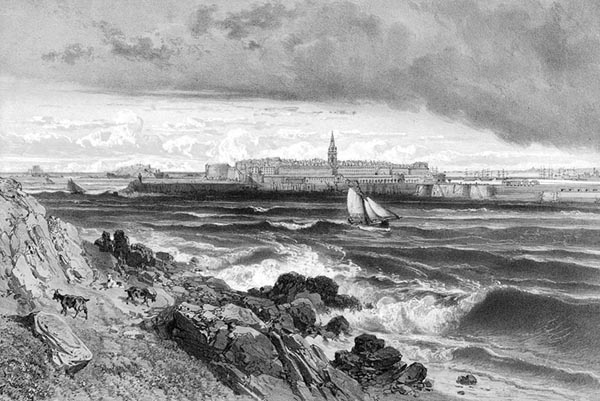
‘Saint-Malo and the Grand Bé, from the Pointe de la Cité, Saint-Servan’ - Félix Benoist (French, 1818–1896) and Adolphe Jean-Baptiste Bayot (French, 1810–1871)
Saint-Malo, built on the sea and enclosed by ramparts, appears, on arrival, like a crown of stone set above the waves, its crowning glory being its machicolations. The waves break against the walls or, at low tide, at their base on the sand. Small rocks clothed in seaweed emerge from the shore at ground level, like black spots on the blond surface. Larger ones, standing upright in straight, perfectly uniform rows, support the base of the fortifications on their uneven summits, thus extending their grey colour and increasing the height.
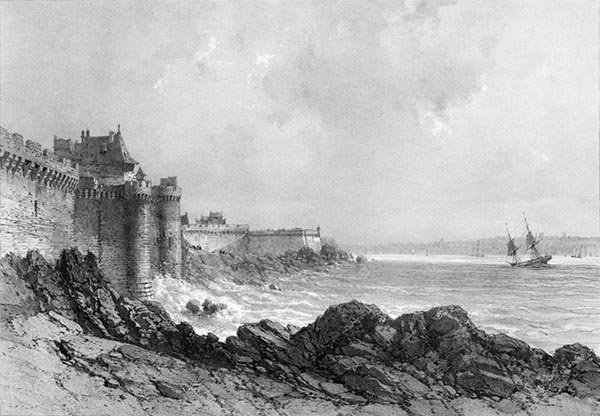
‘The Ramparts of Saint-Malo’ - Eugène Cicéri (French, 1813–1890)
Above this uniform line of ramparts, punctuated here and there by towers, and pierced elsewhere by the sharp points of gates, one sees the roofs of the houses huddled close together, their tiles and slates, their small open dormer windows, their pierced weather-vanes turning, and their red pottery chimneys whose bluish smoke is lost to the air.
All around, on the surface of the sea islets rise, devoid of trees or grass, on which one can distinguish from afar various sections of wall pierced with loopholes and falling into ruin, large pieces of which each succeeding storm washes away.
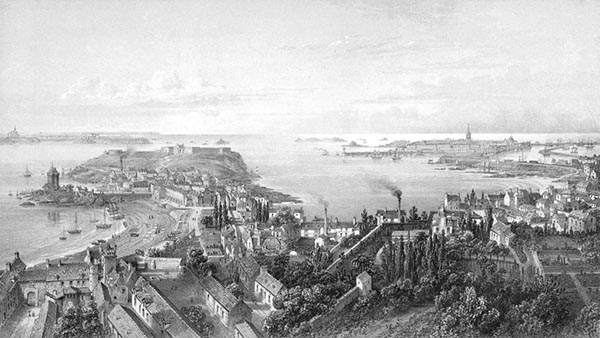
‘Saint-Malo and Saint-Servan’ - Félix Benoist (French, 1818–1896)
Opposite the town, on the other side of the basin, and connected to the mainland by a long jetty that separates the port from the open sea, lies the Saint-Servan district, empty, spacious, almost deserted, nestling comfortably in a large muddy meadow. To the east stand the four towers of Solidor Castle, linked by curtain walls, black from top to bottom. These alone rewarded us for having made the long walk along the beach, in the full July sun, amidst the dockyards, among boiling pots of tar, and the fires of wood-shavings on which remnants of vessels were burned.
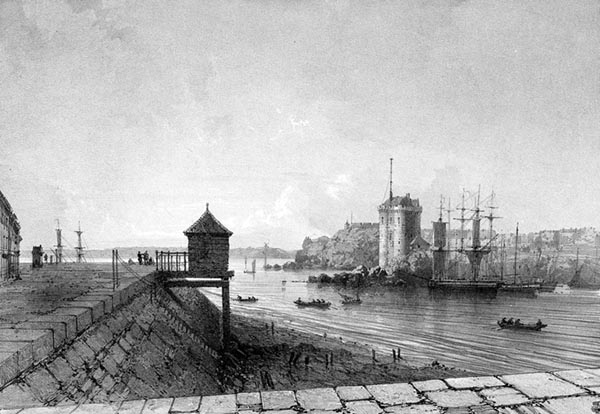
‘The Tour Solidor, Saint-Malo’ - Eugène Cicéri (French, 1813–1890)
A walk around the city, along the ramparts, is one of the most beautiful there could be. No one ever goes there. You sit in the gun-ports, your feet dangling over the precipice. Before you, lies the mouth of the Rance, opening like a valley between two green hills, and then the coast, the rocks, and everywhere the sea. Behind you, the sentry marches up and down, his steady step echoing on the resonant flagstones.
One evening we stayed there a long while. The night was mild, a beautiful summer night, moonless, but sparkling with the light of the sky, fragrant with the scented sea breeze. The town slept; the lamps, one after another, disappeared from the windows, the distant lighthouses shone like red patches in the shadowy sky, which above our heads, was blue and studded in a thousand places by flickering, radiant stars. We could no longer view the sea, but we could hear it, and feel it, while the waves crashing against the ramparts sent drops of foam through the wide openings in the machicolations.
In one place, between the houses and the city wall, in a grassless ditch, piles of cannonballs were lined up. From there one could see, inscribed on the second floor of one of the houses: ‘Chateaubriand was born here.’
Further on, the wall abuts the belly of a large tower: the Quic-en-Groigne; its sister, the Tour Générale, is broad and tall, stout, formidable, swollen in the middle like a hyperbole, and still stands strong. Intact and almost new, no doubt they would appeal yet more if the stones of their battlements had begun to lapse into the waves, while dark foliage, the friend of ruins, rustled in the wind from their summits. Do not monuments, like men and passions, flourish more in memory? Are they not rounded-out by death?
The deserted courtyard, where stunted linden trees cast their rounded shadows on the ground, was as silent as a convent. The concierge’s wife went to fetch the keys from the commandant; she returned with a pretty little girl who had come there to entertain herself by gazing at the strangers. Her arms were bare, and she held a large bouquet. Her naturally-curly black hair peeked out from under her pretty surcoat, and the lace of her trousers fluttered over her little goatskin shoes tied around her ankles with black cords. She ran ahead of us up the stairs, calling out to us.
The climb is long, as the tower is high. The bright rays of daylight from the arrow-slits passes through the wall like arrows themselves. If you poke your head through the openings, you can view the sea, receding further and further, and the raw colour of the sky ever-expanding, so much so that you fear losing yourself therein. The ships look like rowing boats, and their masts like sticks. Eagles must think us the size of ants. Do they even notice us? Do they know that it is we who build the cities, the triumphal arches, the bell-towers?
Once on the tower’s platform, even though the wall reaches your chest, you can’t help but be overcome by the same emotion that grips you on all high peaks: a voluptuous sense of unease, a mixture of fear and pleasure, pride and dread, a struggle between the mind revelling in the view, and one’s strained nerves. You are singularly happy; you want to launch yourself, fling yourself skywards, soar higher, stretch out to the air, be carried by the wind; though your knees tremble, and your body refuses to approach the edge.
Yet men did ascend it, one night, by means of a rope, long ago, in the prodigious sixteenth century (in 1590, the citizens seized the castle from the king’s governor, and the town declared itself an independent republic, which existed till 1594), an age of fierce convictions, and frenzied love. How the human instrument vibrated then, sounding all its strings! How expansive, full, and fertile humanity was! May we not quote, with regard to that age, Fénelon’s words (see ‘Les Aventures de Télémaque’): ‘wrought to perfection for the pleasure of one’s eyes?’ For, without even mentioning its foremost features: beliefs split to their foundations like ruined mountains, new worlds discovered, lost worlds unearthed, Michelangelo beneath his dome, Rabelais’ laughter, Shakespeare observing, Montaigne dreaming, in what other period can one find deeper passion, more extreme courage, harsher examples of willpower, a more complete sense of freedom, at last, as humanity struggled and writhed to escape inborn fatality.
The period stands out, etched in high relief, from surrounding history, and yet how marvellous the manner in which the imagination returns there, brightening the colours, expanding its horizons! Figures pass before you, seemingly alive threefold; one encounters them once; yet for a long time one dreams of them, and strives to complete their profiles, so as to grasp them better. Were they not fine, among others as terrifying, those old mercenaries whose species vanished around 1598, with the Treaty of Vervins, men such as Lamouche, Heurtaud de Saint-Offange, the Lord of La Tremblaye (René de Grézille) who returned from battle gripping his enemies’ heads by the hair, or La Fontenelle, ‘the Wolf’, of whom we have spoken; men of iron whose hearts wavered no more than their swords, and who, drawing to themselves a thousand divergent forces which they directed along with their own, roused the towns by galloping through their gates at night, equipped corsairs, and burned the countryside; men like kings to whom others capitulated! Who has thought of depicting those violent governors of provinces, trampling the crowd, raping the women, and plundering the gold, like D’Épernon (Jean Louis de Nogaret de La Valette), that atrocious tyrant in Provençe yet perfumed darling at the Louvre, like Blaise de Montluc (Marshal of France), strangling Huguenots with his hands, or his nephew Jean de Montluc, Seigneur de Balagny (also a Marshal of France), that ‘Prince of Cambrai’, who read Machiavelli to imitate the Duke of Valentinois (Cesare Borgia; the duchy was centred on Valence), and whose wife rode to the breach, helm on head and in full armour.
One of the most forgotten men of that time, one of those at least whom most historians are content merely to name, is the Duke of Mercoeur (Philippe-Emmanuel de Lorraine), the intrepid enemy of Henri IV, who resisted him longer than the Duke of Mayenne (Charles de Lorraine), longer than the League, and Philip II. Disarmed at the end, that is to say, won over, and appeased (in 1598, under such conditions that twenty-three articles of the treaty were kept secret) not knowing what to do, he went to serve in Hungary, fought the Turks, on one occasion attacking an entire army with five thousand men, then, setting out to return to France, died of fever at Nuremberg, in his bed, at the age of forty-three.
Saint-Malo reminded me of all this. Mercoeur always clashed with its citizens, and could tolerate them neither as subjects nor allies. They were determined to wage war on their own behalf, and conduct trade by their own means, and though fundamentally supporters of the Catholic League (formed during the Wars of Religion, 1562-1598), they rejected the duke, while simultaneously rejecting the Béarnais (Henri IV and his party).
When the Sieur de Fontaines (Honorat du Bueil, Seigneur de Fontaines-Guérin), governor of the city, informed them of the death of Henri III, they refused to recognise the King of Navarre (Henri IV). They took up arms and erected barricades. Fontaines shut himself up in the castle, and both sides remained on the defensive. Little by little, the people encroached. Firstly, they demanded that Fontaines declare his intention to preserve their privileges. Fontaines yielded, hoping to buy time. The following year (1589), they chose four generals independent of the governor. The next year (1590) they obtained permission to stretch chains across the harbour; Fontaines yielded again. The king was at Laval, awaiting him. The moment was near when he could take revenge in one fell swoop for all the humiliations he had suffered, for all the concessions he had made. But he acted too hastily and revealed his true intentions. When the people of Saint-Malo reminded him of his promises, he replied that only if the king appeared would he open the gates. With this, their decision was made.
The château had four towers. They attempted to scale the highest one (the Tour Générale), the one Fontaines believed most secure. Such daring feats were not uncommon at the time, as evidenced by the ascent of the Fécamp cliff by Bois-Rozé (Henri Charles de Goustimesnil; in 1592), and the attack on the château at Blain (Groulais Castle) by the lord of Guébriant (François Le Felle; in 1591)
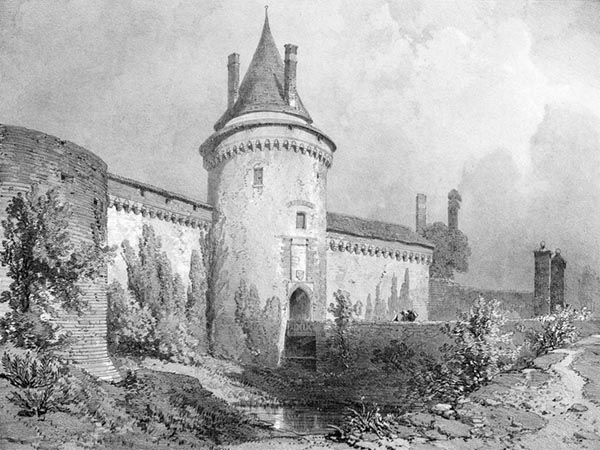
‘The Château de Blain’ - Léon Gaucherel (French, 1816–1886) and Eugène Cicéri (French, 1813–1890)
They consulted, they met several evenings in a row at the home of Josselin Frotet, Lord of La Landelle they solicited the aid of a Scottish gunner in the château, and one foggy night, fully armed, they gathered outside the city wall, having let themselves down on ropes, and approached the foot of the Générale tower. There they waited. A rope with a hook was lowered from the wall, to which they swiftly attached a rope ladder, which was hoisted to the top of the tower, and secured, by the gunner, to the end of a culverin in the embrasure of a crenel.
Michel Frotet was first, then Charles Anselin, La Blissais, and the rest. The night was dark; the wind was blowing strongly; they climbed slowly, daggers between their teeth, feeling their way up the rungs with their feet and groping with their hands. Suddenly (they were already halfway up), they felt themselves descending, the rope lowering. Not a cry; they remained motionless. The combined weight of their bodies had caused the culverin to move; it lodged on the embrasure; they resumed their climb and arrived in single file on the tower’s platform.
The drowsy sentries failed to raise the alarm. The garrison was asleep, or playing dice on the drumheads. Terror seized them, and they took refuge in the keep. The conspirators pursued them there; fighting raged on the staircases, in the corridors, in the rooms; they crushed each other beneath the doors, killing, slitting throats. The townspeople arrived as reinforcements, others erected ladders against the Quic-en-Groigne Tower, entered without resistance, and began pillaging. La Péraudière, the castle’s lieutenant, seeing La Blissais, said to him: ‘Well, sir, a miserable night.’ But La Blissais made him understand that it was no time for talk. The Sieur de Fontaines had not yet been seen. They went to his room, and found him dead on the threshold, pierced by an arquebus shot fired by one of the inhabitants as he was leaving, carrying a torch before him. ‘Instead of hastening into danger,’ said the author of the account, ‘he had dressed slowly, as if going to a wedding, with not an aiguillette left unfastened.’
This surprise attack at Saint-Malo, which caused the king so much harm, did nothing to help the Duke of Mercoeur. He desperately wanted the people of Saint-Malo to accept a governor appointed by him, for example his son who was still a child — thereby, effectively, himself — but they stubbornly refused. He sent troops to protect them, but they denied them entry, and the troops were forced to quarter themselves outside the town.
However, they were no more royalist because of it; since, after their arrest of the Marquis de La Moussay (Charles Gouyon, born in Vitré) and the Viscount de Dénouai, it cost the Marquis twelve thousand écus to redeem his ransom, and the Viscount two thousand.
Then, fearing that Pontbriand might disrupt trade with Dinan and the other cities of the League, they seized the place.
Assuming that their bishop, the temporal lord of the city, might well deprive them of the freedom they had acquired, they clapped him in prison and only released him after a year.
We know the conditions under which they finally accepted Henri IV’s rule; they had to pay for their own defence, nor would they receive a garrison, but were exempt from taxes for six years, etc.
Situated between Brittany and Normandy, this little community seems to possess the characteristics of both: the former’s tenacity and granite-like resilience; the latter’s, passion and drive. Sailors, writers, voyagers on every ocean, what distinguishes them above all is their audacious, intensely human natures, poetic in their brutality, often narrow-minded in their obstinacy. There is this resemblance between those two sons of Saint-Malo, Lamennais (Félicité Robert de La Mennais, Catholic priest, philosopher and political theorist) and Broussais (François Joseph Victor Broussais, physician and surgeon), that they were always equally extreme in their beliefs, and that they devoted, with the same fierce conviction, the latter part of their lives to fighting what they had supported during the first.
Within the town, you pass through narrow, winding streets, between tall houses, alongside grimy premises selling sailing boats or cod. No carriages, no luxuries; it is dark and stinking, like the hold of a ship. It smells of Newfoundland, and salted meat; the rancid smell of long journeys.
‘The watch, executes its rounds every night accompanied by large English dogs, mastiffs, which are set free outside the city in the evening, with a master to control them, rendering it unsafe to be around. But, come the morning, they are led back to a certain place in the town where they rid themselves of all their fury which, at night, is strangely great.’ (See Bertrand d’Argentré, ‘Histoire de Bretagne,’ Chapter X: Saint Malo. D’Argentré, jurist and historian, was born in Vitré)
Apart from the disappearance of that quadrupedal police-force, which once attacked a certain Monsieur Dumollet (note the popular song of 1809, ‘Bon Voyage Cher Dumollet’, apparently based on a like incident involving a naval officer, Ansquer de Kerouarts, in 1770) and whose existence is confirmed by a contemporary text, the external aspects of things have changed little, no doubt, and the civilised folk themselves who live in Saint-Malo claim that it is a very backward place.
The only painting we noticed in the church was a large canvas depicting the Battle of Lepanto, and dedicated to Our Lady of Victories. She hovers high above, among the clouds. In the foreground, all of Christendom is on its knees: parliaments, princesses, and kings, crowns on their heads. In the background, the two armies clash. The Turks are hurled into the waves, and the Christians raise their arms to heaven.
The church (Cathédrale Saint-Vincent-de-Saragosse, rebuilt after the destruction of 1944, completed 1972) is ugly, dry, unadorned, almost Protestant in appearance. I noticed few votive offerings, a strange thing here considering the perilous lives of sailors. There are neither flowers nor candles in the chapels, no Sacred Heart bleeding, no ornate Virgin, nothing, in short, of what so greatly outrages Monsieur Michelet (Jules Michelet, the historian).
Opposite the ramparts, a hundred paces from the city, the islet of Grand-Bé rises from the waves. There stands Chateaubriand’s tomb; this white platform carved from the rock is the place he has designated for his body (in July 1847, when Flaubert and Du Camp visited the islet, the tomb, completed in 1838, was as yet empty; Chateaubriand died the following year, in July 1848)
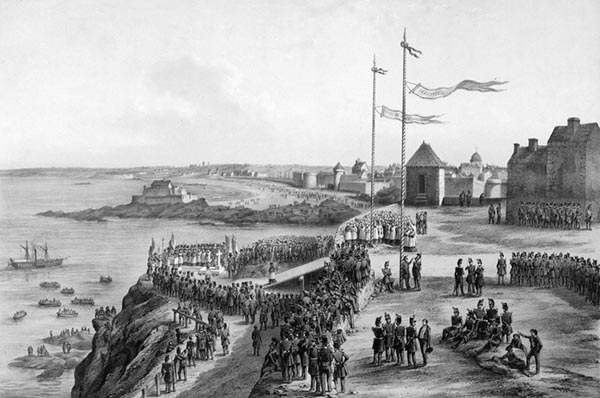
‘The Funeral of Monsieur de Chateaubriand’ - Félix Benoist (French, 1818–1896)
We went there one evening, at low tide. The sun was setting. The water was still flowing over the sand. At the foot of the island, dripping seaweed spread like the hair of the women of ancient times over some grand sepulchre.
The island is deserted; sparse grass grows there, interspersed with small clumps of purple flowers and tall nettles. On the summit stands a dilapidated blockhouse with a courtyard, whose old walls are crumbling. Below this ruin, halfway up the slope, a level space of about ten square feet has been cut into the hillside, in the centre of which stands a granite slab surmounted by a Latin cross. The tomb consists of three sections: the base, the slab, and the cross itself.
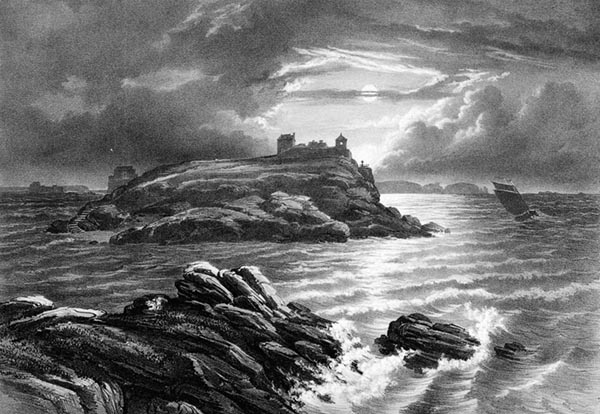
‘Chateaubriand’s Tomb on the Grand Bé, Saint-Malo’ - Félix Benoist (French, 1818–1896)
He will sleep beneath; his head turned to face the sea. Like that sepulchre built on a reef, his immortality will resemble his life, distinct from that of others, and encircled by storms. The waves, through the centuries, will endlessly murmur to him; amidst the tempests they will leap to his feet, while at dawn in summer, when white sails are unfurled, and the swallows arrive, they will bring him, expansively, gently, the melancholy voluptuousness of far horizons, and the embrace of a caressing breeze. Thus, as the days pass, while the waves of his native shore flow, without cease, between his cradle and his tomb, René’s heart, grown cold, will slowly lapse into nothingness, to the endless rhythm of that eternal music.
We circled the tomb, we touched it, and gazed at it as if it already enclosed its future occupant, then we seated ourselves on the ground beside it.
The sky was pink, the sea calm, and the breeze quiet. Not a ripple disturbed the still surface, upon which the setting sun poured its golden hue. Bluish only near the shores, as if evaporating into the mist, the sea elsewhere was red, and even more fiery on the distant horizon, where a great bank of purple stretched the entire length of the view. The sun no longer sent out rays; its orb less bright, its light drowned in the water, seemed to float above it. It slowly descended, drawing from the sky the rosy tint it had bestowed, and as both sources of light faded, pale blue shadows advanced, spreading across the entire vault. Soon the orb touched the waves, touched its round disk to them, then sank to its very centre. For an instant, cut in two by the line of the horizon, one half showing, seemingly motionless, the other sunk below, its form trembled and lengthened, then vanished completely; and when, in the place where it had sunk, light no longer rippled, it seemed a great sadness had fallen, suddenly, upon the sea.
The beach appeared black. A windowpane in one of the town’s houses, which a moment ago had shone like fire, was extinguished. The silence deepened; yet sounds could be heard: the waves crashed against the rocks and fell heavily over them; long-legged midges buzzed in our ears, disappearing amidst the swirl of their diaphanous flight, while the indistinct voices of young lads bathing at the foot of the ramparts reached us, accompanied by their cries and bursts of laughter. We could see them from afar, struggling to swim, racing into the waves, or running along the shore.
We descended to the sands from the isle, and crossed the beach on foot. The tide was advancing, rising quickly; the channels were filling; in the hollows of the rocks foam was trembling, or, borne from the rims of the waves, it flew in flakes, and skipped as it fled.
The naked youngsters, having emerged from their briny bath, went to dress on the pebbles where they had left their clothes and, with hesitant feet, advanced over the stones. While attempting to put on their shirts, the fabric clung to their wet shoulders, and one could see their white torsos, writhing with impatience, while their heads and arms remained trapped, the sleeves fluttering and flapping in the wind like banners.
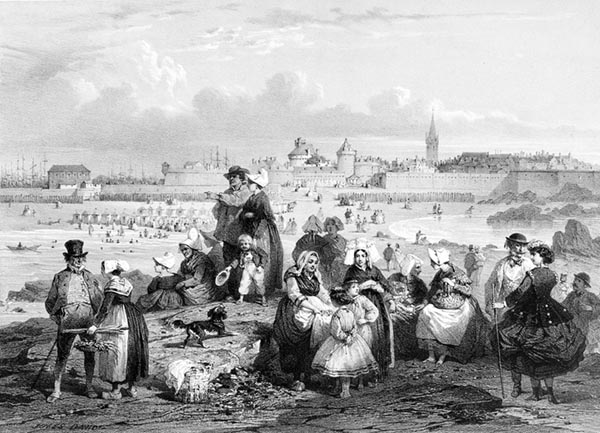
‘The Bathing Beach, Saint-Malo’ - Félix Benoist (French, 1818–1896)
A man passed us, his wet hair hanging down around his neck. His wave-washed body glistened. Drops beaded on the curling strands of his black beard, as he shook the water from his brow. His broad chest, a hairy furrow running across his ribcage between solidly carved muscles, still heaved with the fatigue of swimming, and imparted a calm movement to his flat stomach, whose contour toward his sides was as smooth as ivory. His sinewy thighs, with their successive planes, moved above slender knees that, in firm supple fashion, rested on slender but sturdy lower legs, each ending in an arched foot, with a short heel, and splayed toes. He walked softly over the sand.
Oh, how beautiful the human form is when it appears in a free and natural state, as in the first days of the world! What is it now, masked and condemned never to appear in the light? That concept ‘Nature,’ which humanity has repeated in idolatry or terror, alternately; which philosophers have plumbed; which poets have sung — is it not lost, forgotten? If, far from the platforms from which people shout, and the crowds in which they push and shove, there are still, here and there on Earth, yearning hearts endlessly tormented by an uneasy sense of beauty, who feel within themselves a ceaseless and desperate need to utter what cannot be said, and achieve what is only dreamed, it is there, to the home of the ideal that they must hasten, there that they must live. But how? By what path? Mankind has cut down the forests, ploughs the seas, and the sky above our cities is clouded with the smoke from his fires. Is it not his glory, his mission others say, to progress forever in this way, attacking the work of the deity, conquering it? Mankind denies it, shatters it, crushes it, even within himself, even in the flesh, of which he is ashamed, and which he conceals like a crime.
Mankind has thus become the rarest and most difficult thing to appreciate (it is not the heart I speak of, oh moralists!), and the result is that the artist is now ignorant of his own form, and the qualities that make it beautiful. What poet today, among the most learned, knows what a woman is? Where has he ever seen one, the poor wretch? What could he have learned of her in salons, hidden in her corset, her starched crinoline, even in his own bed, if he considered her there, during his intermissions of pleasure?
Sculpture, however, teaches the beholder more fully than all the rhetoric in the world, the gradation of proportions, the fusion of planes, and ultimately, the nature of harmony! Thus, the ancient peoples, by the mere fact of their existence, imbued the works of the masters with their nobility of bearing, and purity of features.
In Juvenal, I hear, vaguely, the groans of the naked gladiators; Tacitus has turns of phrase that resemble the senatorial tunic’s broad purple stripe (laticlave), while certain verses of Horace evoking the loins of a Greek slave, and the sway of the hips, sound, in their short and long syllables, like castanets. But why concern ourselves with the past?
Let us look nearer home, and consider what is being created now. Is not what is in demand today the very opposite of the bare, the simple, the true? Fortune and success, these days, come to those who know how to clothe and dress the world! The tailor is the king of this century, the fig-leaf is his symbol; underwear everywhere in the law, arts, politics! False freedoms, veneered furniture, sentimental art, the public loves them. Give it to them, stuff them, let them gorge themselves, the fools!
They rush to admire engravings, and neglect the art of painting, they sing a romantic song, and sleep through Beethoven, they know all of Béranger by heart, and not a line of Hugo.
It’s a revelation to see them dining, filling themselves with the heaviest food, intoxicated by the most adulterated liquids. Common dishes are served at speed, and as for tomorrow: more of the plays of Eugène Scribe, more of those landscapes by Claude-Joseph Vernet, more, more of the novels of Eugène Sue — whatever is easily digestible, whatever occupies least space in the stomach, so there’s more room for such fodder.
Countryfolk, in particular, revel in these wares with edifying tenacity. Their tastes are more genuinely foolish, more savagely stupid; they display less finesse than the city-dwellers, who at least adopt new fashions even if their taste remains the same. How many thousands of copies of Amour Conjugal (‘Tableau de l’Amour Conjugale’ Nicolas Venette’s sexual treatise of 1686), and Faublas (‘Les Amours du Chevalier de Faublas’, the erotic serial novel by Jean-Baptiste Louvet de Couvray, of 1787-1790) are sold annually in the countryside! Not to mention Europe and Asia, those saucy young ladies with their viscous gazes that adorn every cottage. But you must view the fine pictures in the inn at Cancale to see ugliness, silliness, and vulgarity depicted in all their fullness.
Imagine, in a low-ceilinged room, five black wooden frames hanging on the walls, and within these frames, reds, blues, yellows, a mosaic of bold colours highlighted, like a variegated stain, against the whiteness of the plaster wall.
One approaches the first frame and reads below the engraving: The Marriage Proposal. The scene is a richly-furnished drawing room, a green carpet, red wallpaper, handsome bell-pulls on either side of the fireplace, which is adorned with a clock representing Time with his scythe. A young man — and what a young man, the very picture of a young man: a blue coat with gleaming buttons, a pink cravat pulled straight between the two shawl lapels of a velvet waistcoat, and studded with a diamond pin, grey trousers of a very mythological air, handsome thighs, a small mouth, charming hair; a young man smiling and seemingly shy — is being presented by his father to a lady seated in an armchair, and a young woman standing on a stool. The mother, swathed in lace, looks a little ill, somewhat unwell, and smiles with the charming smile of indulgent old age contemplating young love; the father of the future husband is a perfectly respectable man, sporting a medal of honour and a white tie, with a superior air, and well-hung. As for the young woman’s father, he is an old man, utterly decrepit yet venerable, with a considerable amount of white hair, wearing a fine egg-yellow frock coat with a very high collar, rounded like a gutter. Everyone is smiling in unison; their hearts share an access of emotion: love — paternal, maternal, and filial affection — joy, hope, and a pleasant sense of satisfaction, combined with the unease of the as yet unknown, which pierces, stirs, and charms their hearts.
The second engraving represents The Wedding. The scene is the church, with the priest, the altar, the bride in white, the ring being slipped onto her finger; the mother is crying, the young man’s father in a corner is moved, but smiling; all the women have feathered hats; the groom, in black, his hair curled and as hard as iron, his trousers even tighter, wears very pointed boots: he is a cherub.
The third scene is The Ball. A gathering of high society, sumptuous luxury; a pair of chandeliers, glittering quadrilles, a seemingly endless line of feet in pointed shoes, watch-chains everywhere, a shower of scarves and turbans, utterly dazzling splendour. Meanwhile, the groom is drawing his companion aside, and saying to her, in a passionate voice: ‘My love, how I long for you to share my home, and my bed! I possess you, come! Would you like to experience an even more delightful celebration than this one, which our guests attend for our pleasure? Marriage will teach you…’ etc, etc.
The fourth scene, The Bride Preparing for Bed. She is being undressed; the bed is there, the sheets turned back, next to it a bedside table, candlestick, and matches. The mother whispers ‘mysterious words’ in her daughter’s ear concerning the new duties she has to fulfil; through the half-open door, we see the groom, ‘burning with love,’ desperately wishing to enter, while the bridesmaids push him away, and ‘for a moment, thwart his wishes,’ consumed as he is by ‘the most legitimate, the purest, the most touching impatience.’
A fifth tableau, The Bride on Waking. The mysteries of Venus are accomplished; the bride’s womb has received the procreative seed the product of which, in nine months’ time, will ‘fill the couple with fresh happiness’; the bed is unmade; on the marble bedside table are the remains of a pâté, and an open bottle of wine; below, one glimpses the chamber pot, while a maid throws dirty linen into a cupboard; the parents, who arrived at dawn, rush into their children’s arms; the bride’s features are drawn, her headbands untied, and her nightgown half-open. The caption, moreover, declares her ‘a little weary perhaps of the renewed assaults of marriage, but happy, her heart filled with supreme bliss.’ The radiant groom, in an azure dressing-gown adorned with red lapels and a gold cord, and extra-pointy purple velvet slippers, confides to his still-smiling father the detailed ‘charms of the past night,’ and the bride confides to her mother ‘the intoxication she felt’; the latter urges her ‘to that purity, and chastity which are the basis of the State and which guarantee the happiness of a family for centuries.’
We emerged onto the quay seeking some fresh air, to find the sun shining brightly; the exposed shore was grey with the mud that covered it, and on its smooth, icy bed, empty boats were beached in every conceivable position, fishing-nets hanging from the mastheads to dry. The wooden planks of the boats, oozed black droplets. In the mist, penetrated by sunlight, alone amidst the sea, rose Mont Saint-Michel, a bluish dome with jagged peaks; to its right, the Normandy coast, continuing in an undulating line the immense sweep of the bay, and gradually reducing in height, the vagueness of its contours merging on the horizon into a whiteness of light cloud.
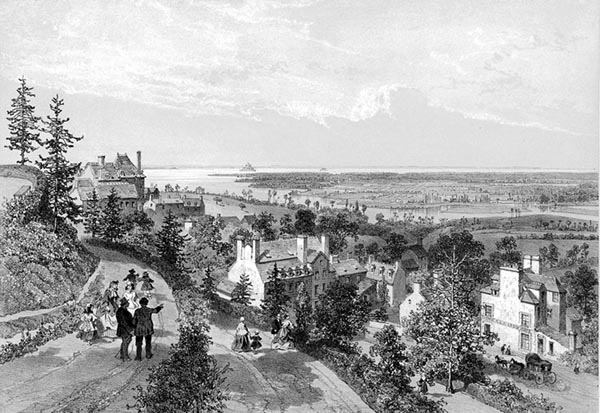
‘Avranches: the Bay of Mont-Saint-Michel from the Promenade’ - Félix Benoist (French, 1818–1896) and Adolphe Jean-Baptiste Bayot (French, 1810–1871)
We slithered over the warm mud in which our bare feet sank to the ankles; here and there, in pools of water enclosed by squares of pebbles, a few oysters slept in their green shells like people taking a nap with the blinds closed.
To reach the Cancale rocks (Pointe du Grouin) we boarded a rowing boat; the sail, hoisted to its full height, and covering us with shadow, was mirrored in the water; we progressed gently and slowly, without making a sound.
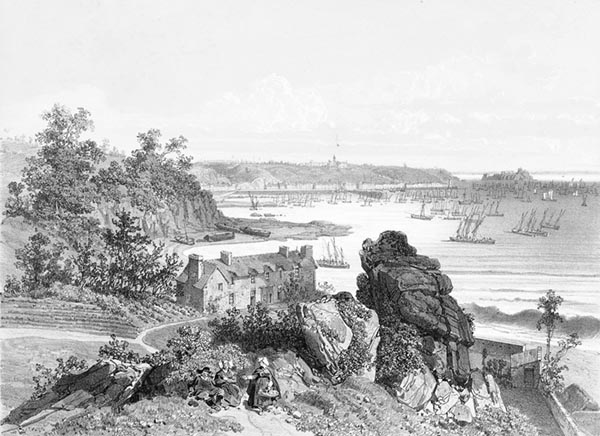
‘Cancale and La Houle’ - Félix Benoist (French, 1818–1896) and Adolphe Jean-Baptiste Bayot (French, 1810–1871)
The point is a pair of unequal summits, or rather, two piles of rock separated by a crevice that can be passed through at high tide; it is made of accumulated blocks; tamarisks, wild thyme, and heather grow there. The rabbits that live there flush from the undergrowth in fright when you throw pebbles. After climbing to the top, seating ourselves in various places, and wandering around, we returned to the boat, which dropped us a quarter of an hour later on the pebbles at the foot of the cliff.
The road ends abruptly at a corner, revealing the village of Cancale, its walls lined with dry-stone quays. There, lying flat on my back on the sand, hat pulled down over my eyes, arms outstretched, I spent a good hour and a half basking in the sun, like a lizard. One feels one’s body inert, numb, lifeless, almost one with the ground on which it lies, while the soul, on the contrary, having departed far off, flutters about in the air like a stray feather.
When I looked up, the beach had vanished; the tide had covered it quite swiftly, and the boats, motionless a moment before, were now rising and re-floating. Amidst the long rolling waves, arriving one upon another like successive manifestations of the Flood, and racing at full speed over the flat beach, where they spread endlessly, the boats, full of people, crossed courses, emptied, and returned to the quay. They were about to go fishing; the rudders were hooked on, the oars lashed, the sails hoisted; one saw boats tacking to catch the wind, and, each pursuing its course, and heading out to sea.
While the horses were being harnessed to the carriage which would return us to Saint-Malo, we thought it a good idea to eat some oysters, and take one last look at those picture-frames. The hostess, poor woman, was dressed in black having lost her husband the previous week, and her daughter three days ago. In a ragged-straw armchair by the window, she remained motionless, unconcerned with appearances, gazing through the panes at the sea where her husband’s boat was no longer visible, and at the empty quay where other people’s children were playing. She probably finds scant amusement now in the famous engravings, but the servant, I imagine, takes pleasure and finds sustenance in them. It is likely that she covets above all the jewellery there, and dreams of queenly happiness, of some sensual, opulent existence, shimmering with the colours of cashmere and as sweet as syrup, complete with a handsome, well-dressed lover; and of amorous ecstasies amidst Dutch-linen sheets. A drunken sailor entered the inn singing and demanding a drink; when no one answered him, he slammed his fist on the table, causing the stacks of plates to clatter. The woman in black turned and said:
— ‘What do you want?’
He replied, continuing his song, that he needed a drink; she interrupted him with a wave of her hand and said:
— ‘You know my heart is too full of grief, there is no singing here; go.’
And she repeated to him with a pleading expression, of disgust and entreaty:
— ‘Oh! Please go; go!’
He halted, cast an idiotic gaze over the walls, then exited, bumping into the door, after which he immediately began yelling at the top of his lungs again.
In Saint-Malo, in the courtyard of our hotel, we found Madame Maillard (or Maillar, owner of the Hôtel de France et de la Paix) sitting as usual in her glass-enclosed hutch, her fingers swollen with rings, shelling green beans onto a kitchen apron over her yellow bathrobe.
When we first saw her, on the morning of our arrival (she was standing there, twirling her keys with her index finger), her admirably soft and beautiful black eyes slanting towards the temples beneath long eyebrows; her slender waist heavily adorned behind with all the deceptions of industry, emerald buttons on her batiste chemisette; earrings dangling against her thin neck, and a necklace jingling on her collarbones; with her watch-charms, gold lorgnette, brooches and cameos; her yellow dress, open, so loose about her body, so expressive; with pomade on her headbands, and a smile that rendered her mouth with blackened teeth almost pretty, we conceived, it must be admitted, an unfavourable view as regards her morals, but a very favourable view of her hotel. The green shrubs in the courtyard, the bouquets of flowers arranged in porcelain vases, the nasturtiums in bloom climbing about the windows, and the silver braid on our bed curtains, right down to the goldfish swimming in their tank, all of this created a sort of fine feminine, Spanish, Andalusian, odalisque, and refreshing atmosphere, that was a pleasure to rediscover after the moorland wastes of Armorica.
A foolish presumption of ours, as regards her morals! A total error of judgment! Madame Maillard is the best mother in all the world, and the most loving wife in the whole department, including all the islands off the coast; she has fourteen children whom she raises to be hard-working and principled; her eldest daughter makes the desserts, and her second son has gone to Jersey to learn English so that he can one day serve as an interpreter in the establishment.
She has added a curiosity shop, where she advertises, relentlessly, her Japanese plates, English lace, stuffed humming-birds, and large pieces of Faenza ware which she naively tries to pass off as Palissy porcelain (produced by Bernard Palissy in the sixteen century), to foreign customers. She also shows, tucked away in a cupboard, half a dozen mismatched books, including a second volume of Dom Morice (Pierre-Hyacinthe Morice, eighteenth century Benedictine monk, and the author of works on Breton history) which she was keeping for one of her sons should one of them later decide to study history, ‘since it is a fine science, and an admirable thing for a man to study.’
From time to time, she leaves you when the doorbell, on the door that connects the hotel to her shop, sounds, but she soon returns; she spends her life there, selling, buying, re-selling, arranging, wiping, dusting, fiddling about; her husband knows nothing as regards the business, being a complete idiot when it comes to the arts.
The shop alone proved our assessment wrong; she wears the finest adornments herself, only to show them and offer them to collectors: a bracelet today, a collar this evening, a purse tomorrow. What one might mistake for the trimmings of vice are simply perfectly honest speculation; she adorns her body not to sell it, but to use it as a display shelf.
We had to part ways, though. One morning, after most amicable farewells, we left Saint-Malo to spend the night in Pontorson.
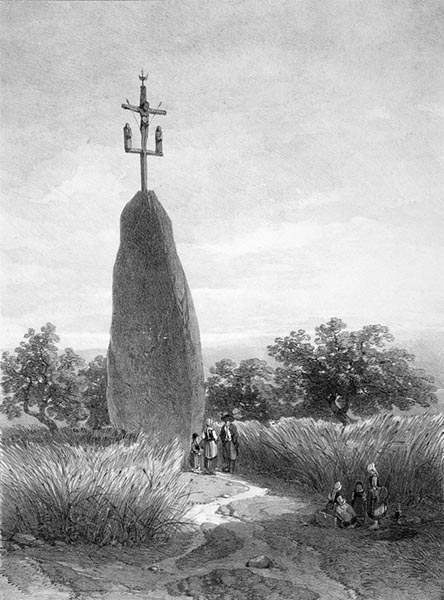
‘The Menhir of Champ-Dolent, near Dol’ - Léon Gaucherel (French, 1816–1886) and Eugène Cicéri (French, 1813–1890)
The cathedral of Dol (Saint-Samson, Dol-de-Bretagne), on the way there, is a church in a fine style, its trefoil-shaped narthex lending it a charming, unadorned grace, yet rich in its own right due to its lofty proportions. Its austere pointed arch aptly recalls the metropolitan pride of its bishops, whose descendants still display their curved croziers, gilded from top to bottom, in the choir.
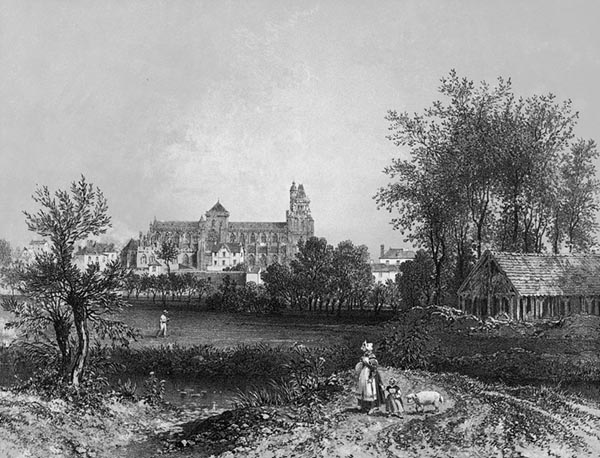
‘Dol Cathedral’ - Félix Benoist (French, 1818–1896) and Eugène Cicéri (French, 1813–1890)
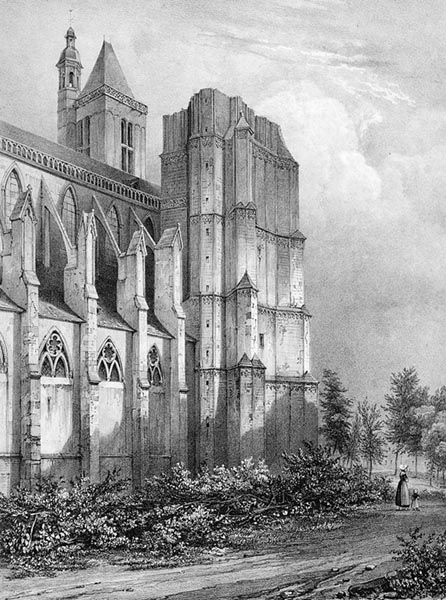
‘Dol-de-Bretagne’ - Félix Benoist (French, 1818–1896)
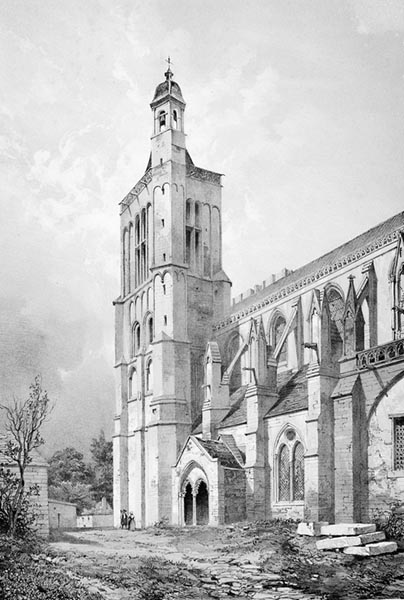
‘Dol Cathedral’ - Léon Gaucherel (French, 1816–1886)
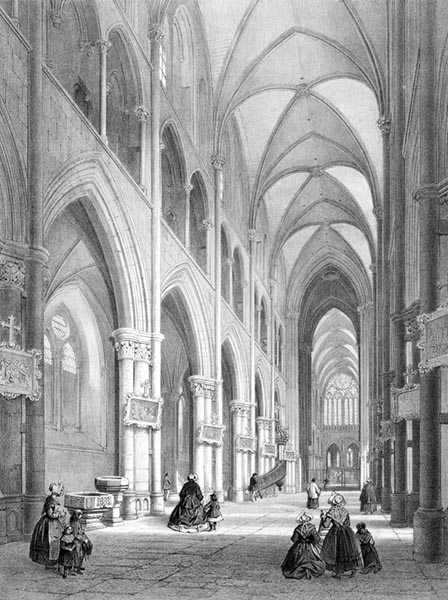
‘The Interior of Dol Cathedral’ - Félix Benoist (French, 1818–1896)
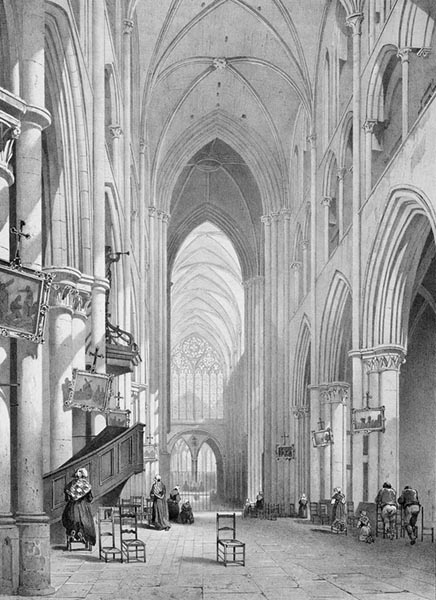
‘The Interior of Dol Cathedral’ - Léon Gaucherel (French, 1816–1886)
Having arrived early in Pontorson, and immediately feeling bored, we walked, so as to occupy our time and nurse our ennui, along the poplar-lined promenade, beside a small river that flows among clumps of shrubs and slender marsh reeds. The view terminates at each bend in the shoreline, or floats, uncertainly, while providing little of interest, over the flat meadows regularly intersected by long lines of trees. As a salmon had been caught the day before, three or four locals, positioned on the banks of the muddy waters, were splashing into the stream and hauling up a large square net, hoping at any moment to feel the mesh tear under the weight of the dreamed-of catch. When we had witnessed enough of their alternating hope and disappointment, we returned to the inn to dine.
The road from Pontorson to Mont Saint-Michel is treacherous because of the sands. Our post-chaise (for we did also travel by post-chaise) was constantly disturbed by a multitude of carts filled with the grey earth of the region which is exported somewhere to be used as fertiliser. These increased in number as we approached the sea, over several miles, until we finally reached the deserted shore from which they came. On this white expanse, where the mounds of earth, raised into cones, resembled huts, the carts, their long, undulating line receding into the distance, reminded us of some migrating barbarian horde, beginning to depart the plain.
The empty horizon extends, widens, and finally its chalky terrain merges with the yellow of the shore. The ground becomes firmer and a briny smell reaches you; it looks like a desert from which the sea has receded. Long tongues of sand, ranged one after another, continue endlessly, in indistinct planes like a wave’s ripples, forming great curved lines, the wind delighting in tracing giant arabesques across their surfaces. The ocean waves are far away, so distant that they are no longer seen, their sound inaudible except for a vague murmur, elusive and ethereal, the very voice of solitude, which is perhaps nothing more than the stupefying effect of a vast silence.
Opposite, in front, the large, round rock rose, its base fortified with crenelated walls, its summit crowned by a church, its towers plunging into the sand and its spires reaching into the air. Enormous buttresses supporting the sides of the structure rest on a steep slope from which cascade outcrops of rock, and clumps of wild greenery. Halfway up the slope, terraced as best they can, rising above the white band of the wall and dominated by the brown mass of the church, a few houses, show their bright colours between those two broadly uniform hues.
The post chaise went ahead of us, we followed at a distance, following the rut-like furrows its wheels were ploughing; it sank into the distance, and its hood, which alone we could see as it fled, looked like a large crab dragging itself over the shore.
Here and there, streams of water flowed, one had to cross further upstream. Or else they were squares of mud that appeared unexpectedly, their uneven meanders framed by the sand.
Two priests, also visiting Mont Saint-Michel, accompanied us. Afraid of soiling their new robes, they drew them around themselves when stepping over the streams, and hopped across, leaning on their walking sticks. Their silver buckles were grey with mud which the sun dried, and their soaked shoes gaped and squelched at every step.
The mount, however, was growing in size. At a single glance one could view the whole thing, and we could count the roof tiles, the clumps of nettles in the rocks and, at the very top, the green slats of the shutter of a small window that overlooks the governor’s garden.
The first gate, narrow and pointed in shape, surmounts a kind of causeway of pebbles leading up from the sea; on the eroded shield of the second, undulating lines carved in stone seem to represent waves; on the ground, on either side, lie enormous cannons made of iron bars joined with similar hoops. One of them still has a granite cannonball in its mouth; captured from the English, in 1425, by Louis d’Estouteville, they have been there for four centuries.
A handful of houses facing each other form the whole street; the alignment ceases, though further houses appear along the steep paths and stairways that lead to the castle, succeeding each other at random, perched, piled, one on another.
To reach the castle, you first mount the curtain wall, whose ramparts hide the sea from the dwellings behind. Earth is visible between the cracked flagstones; grass grows amidst the battlements, and pools of urine spread over the collapsed ground, eroding the grey stones. The ramparts skirt the island and rise in successive tiers. Once past the watchtower at the angle between the two towers, a small, straight staircase appears; step by step, as you climb, the roofs of the houses gradually recede beneath you, till their dilapidated chimneys smoke a hundred feet below. One sees laundry hung out to dry, at the dormer window of the attics, at the ends of poles decorated with red rags sewn together; or, between the roof of one house and the ground floor of another, some small garden baking in the sun, the size of a table where the leaves of leeks, languishing with thirst, droop over the grey earth; but the far side of the mount, looking out over the open sea, is bare and deserted, and so steep that the shrubs grow there with difficulty, leaning over the abyss, and seemingly about to fall therein.
High above, climbing at ease, enjoying as expansive a view as human eyes can feast upon, gazing at the sea, at the coast unfolding in an immense bluish curve on the horizon, or, rising on its perpendicular slope, the wall of the Merveille (the ‘Marvel’, a term for the Mount’s spectacular Gothic buildings), with its thirty-six giant buttresses, a smile of admiration tightening one’s lips, one hears, suddenly, the sharp clatter of looms. Cloth is being woven. The shuttle advances, beats, strikes abrupt blows; everything is involved in the din.
Between two slender turrets representing two cannons on their breechblocks, the castle’s entrance opens in a long archway, while within it a granite staircase rises. The centre remains perpetually in shadow, the rest barely illuminated by the two shafts of light, one from below, the other falling from above through a gap in the portcullis; it is like an underground passage rising beyond you.
On ascending to the summit of this grand staircase, one enters the guardhouse. The sound of rifle-butts echoed beneath the vaulted ceiling, along with the voices of the sergeants performing the roll-call. Drums were beating.
A guard returned our passports, which the Governor had wished to see; the guard beckoned us to follow, drawing the bolts and opening the doors, and led us through a labyrinth of corridors, vaults, and staircases. It is easy to go astray; a single visit is scarcely enough to grasp the complex layout of the combined buildings, where fortress, church, abbey, prisons, and dungeons — all are present, from the Romanesque style of the eleventh century to the flamboyant Gothic of the sixteenth. We could only view the Knights’ Hall, which is now used as the weavers’ workshop and therefore closed to the public, through a windowpane and by standing on tiptoe. We could barely make out its four rows of seats. Columns with trefoil capitals support a vault with projecting ribs. Two hundred feet above sea level, the cloister is built over this Knights’ Hall. It consists of a quadrangular gallery formed by a triple row of small columns in granite, tufa, granite-like marble, or stucco made from crushed seashells. Acanthus, thistle, ivy, and oak forms twine around their capitals; between each pointed arch, a trefoil rose-window is silhouetted against the light; the cloister has been converted into the prisoners’ courtyard.
The prison guard’s cap passes by walls which one once saw the tonsured skulls of the hardworking Benedictine monks, as they walked by dreaming, and the prisoner’s clogs clatter on those flagstones that were brushed by the monks’ robes rising above large leather sandals that creaked under the weight of their feet.
The church contains a Gothic chancel and a Romanesque nave, the two architectural styles vying for grandeur and elegance. In the chancel, the pointed arches of the windows are tall, sharp, and slender, like a yearning for love; in the nave, the rounded semicircular arches, open one row above another, and wall-columns rise like palm-tree trunks. Their bases rest on square pillars, their capitals are crowned with acanthus leaves, and powerful ribs continue beyond, curving beneath the vault, which they intersect, and support.
It was noon. Through the open door, bright daylight and a breath of fragrant air streamed across the dark walls of the building. The nave, separated from the choir by a large green, canvas curtain, is furnished with tables and benches, since it is used as a refectory.
When Mass is said, the curtain is drawn, and the prisoners hear divine service without moving their elbows from the place where they eat: which is most ingenious.
To extend the platform on the west side of the church by twelve meters, they simply shortened the church itself; but since some kind of entrance was needed, an architect conceived the idea of closing off the nave with a Greek-style façade; then, perhaps feeling remorse or, more likely, wishing to refine the work, added columns with capitals, ‘effective imitations of those of the 11th century’ according to the description. Let us be silent, let us bow our heads. Each of the arts has its own particular leprosy, its own ignominious mortal disease, that gnaws at its face. Painting has the ‘family portrait’, music the ‘romance’, literature ‘criticism’, while architecture has its architects.
Prisoners marched around the platform, all in a line, one behind the other, unspeaking, and with arms crossed, in that fine and regular order we had seen at Fontevrault. They were the sick from the infirmary, allowed out for fresh air, and distracted thus, in order to cure them.
One of them, lifting his feet higher than the others, and gripping the jacket of the comrade in line in front of him, stumbled along. He was blind, poor wretch! God prevents him seeing, Man forbids him from speaking! He looked gentle, however, and his shuttered face smiled in the warm rays of the sun.
After giving a coin to our guard, who made a wild-cat grimace in thanks, we descended the stairs, and five minutes later were back among the houses where women, seated in front of the doors, were weaving nets on their knees.
When crossing on foot to Tombelaine, which similarly is a rocky tidal isle, about two miles north of Mont Saint-Michel, and situated in the middle of the bay, one employs a guide so as to avoid the pools and streams of water. Even in seemingly safe spots, if you halt, you feel yourself sinking into the sand, which starts to bubble and rise around you; in ten minutes it would be up to your stomach, in half an hour up to your shoulders.
When you cross a stream, the swift current rushes between your legs with the force of a torrent; it is dizzying to stand and watch the flow. Everywhere around you, there is nothing but sand, monotonous stretches that succeed one another, and vanish in flight; but on turning your head, the entire Mount seems so close, with its houses, its shrubs clinging to the slopes, and its church at the very top, that it appears to be pursuing you.
Tombelaine is a small, flattened granite islet, barely above the surface of the sand. In the grass, remnants of foundations are still visible, and two parallel tracks run like carriage ruts along the entire length of the rock. It was here, that Montgomery (Gabriel de Lorges, Comte de Montgomery, Captain of Henri II’s Scotch Guards, who mortally injured Henri in a jousting accident in 1559) had the plunder from Catholic churches transported; he established a mint, and beautiful, brand-new gold coins leapt across these stones where weary cormorants come to rest their pink feet during storms. Until the Revolution, in a small chapel, of which nothing remains, a perpetual lamp burned.
Tombelaine! Where does the name come from? Is it that of the young girl, of legend, who, unable to follow her lover who accompanied William the Conqueror on campaign, remained on the isle awaiting him, finally dying of grief, and so buried there? Or is it that of King Hoël’s mother who, abducted from her parents by a Spanish lord, was supposedly brought there, raped, and murdered? A vague tale, then, to do with a woman, still lingers on, with regard to this reef!
In the evening, while we were dining, a procession of children led by the priest passed by, singing, beneath our windows. They held candles in their hands and, walking two by two, climbed the steps leading from the street to the ramparts. We could see the white dresses of the little girls ascending amidst the lights, and hear their voices fading away.
As night fell, we climbed the towers to watch the sunset; there we talked with an old sailor who, leaning on the parapet, was smoking his pipe like us, while digesting his meal. He had made several long voyages, had been to Cochin China and India, visited Japan, and the White Sea (an inlet of the Barent’s Sea, the site of Arkhangelsk, or Archangel, the chief seaport of medieval and early modern Russia until 1703); he told us about those countries and the sights he had seen, as the rising tide lapped against the base of the towers, the stars appeared, and from time to time the distant voices of the sentries, shouting: ‘Garde à vous!’ (‘Attention!’), echoed in the shadows.
The next day, when the tide had receded, we left the Mount, beneath a blazing sun that heated the leather seats of the carriage. We advanced at walking pace; the axles creaking, the wheels sinking into the sand. At the end of the sands, on the grassy shore, I peered through the small window at the back of the carriage, and bade farewell to Mont Saint-Michel.
In order to visit Combourg (the château in which Chateaubriand spent his early youth), we were obliged to return to Dol; it was the portly postmaster of Pontorson who took us there himself. Seated on the apron of his carriage (we had abandoned our own), both feet on the shafts, in his shirt, and with a pipe in his mouth, he urged on his two dappled horses at a brisk trot and cracked his Perpignan whip (Sorède, south of Perpignan was, and is, known for its whip and riding-crop manufacture); from the furthest distance, he shouted at any vehicles to pull aside, cursing those who ignored him, as well as those who complied, the former in anger, the latter for the fun of it, shouting and swearing, furious or facetious by turns, a despot of the highway, which he treated as if it were his private property.
From Dol to Combourg, on the contrary, the poor fellow who drove our tilbury could barely keep hold of the reins, and dozed, overcome by the heat. As for ourselves, we spoke so little we scarcely thought to look at anything.
A letter from the Vicomte de Vezins was supposed to guarantee us entrance to the château. So, as soon as we arrived, we asked to see Monsieur Corvaisier, who is the steward.
We were made to wait in a large kitchen where a young woman dressed in black, badly scarred by smallpox and wearing tortoiseshell glasses over large, near-sighted eyes, was shelling currants into a bowl. The jam pot was on the stove, and sugar was being crushed with bottles. Clearly, we were intruding. After a few minutes, someone came downstairs to tell us that Monsieur Corvaisier, ill and shivering with fever in his bed, was very sorry he could not be of service, but that he sent us his regards. However, his assistant, who had just returned from his errands and was having a snack in the kitchen, drinking a glass of cider and eating a slice of bread and butter, offered to show us around the château instead. He put down his napkin, sucked his teeth, lit his pipe, took a packet of keys from a nail, and started off, walking in front of us through the village.
After advancing alongside a high wall, we entered a silent farmyard through an old arched gate. Flints jutted from the hard-packed earth, in which sparse grass grew, fed by the manure that was hauled over the ground. There was no one there; the stables were empty. In the sheds, hens, perched on the cart-shafts, slept with their heads tucked under their wings. At the foot of the buildings, the remnants of straw that had dispersed from the barns muffled the sound of our footsteps.
Four large circular towers, joined by curtain walls, revealed beneath their pointed roofs openings pierced in the battlements, like the gunports on a warship; while the arrow-slits in the towers, as well as the small, irregularly placed windows on the main body of the château, showed as uneven black bays against the grey stonework. A wide flight of about thirty steps led directly to the first floor, which has become the ground floor of the inner apartments since the moat was in-filled.
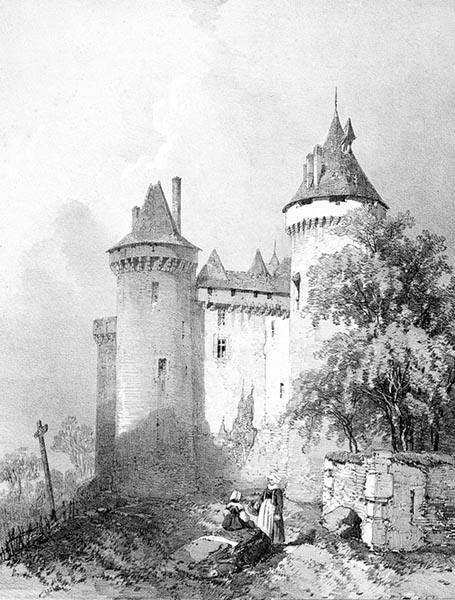
‘The Château de Combourg’ - Eugène Cicéri (French, 1813–1890)
The ‘yellow wallflowers’ (see Chateaubriand’s novella, ‘René’) no longer grew there, but mastic shrubs and nettles did, along with greenish moss and lichens. On the left, near the tower, a clump of horse-chestnut trees has reached the roof, and shelters it with its foliage.
When the key was turned in the lock, and the door, with a few blows of the foot, had scraped on the damp cobblestones for a while, we entered a dark corridor cluttered with planks, ladders, barrel-hoops, and wheelbarrows.
The passage leads to a small courtyard nestled between the inner walls of the castle, which enclose the space. Daylight enters only from above, as in a prison yard. In the corners, moisture trickled down the stones.
Another door was opened. It led to a vast, bare, echoing room; the stone paving was broken in a thousand places; the old panelling had been repainted.
The woods opposite cast a livid light through the large windows, and tinted the whitewashed walls with a green hue. At their feet, a lake extended, its rushes meeting the grass; beneath the windows, privet, acacia and lilac, growing randomly in the old flowerbeds, cover the embankment with a mass of wild undergrowth that descends to the main road; the latter passes along the bank of the lake, and then continues through the forest.
Nothing echoed in the deserted room where, at this very same hour of the day, the child René used to seat himself on the windowsill. The clerk smoked his pipe, and spat on the floor. His dog, which he had brought with him, wandered about, hunting for rats, its claws clicking on the pavement.
We climbed the winding staircase. Our feet stumbled, our hands groped. Moss had grown on the worn steps. Often a ray of light, passing through a crack in the walls, and slanting down from above, made some green sprig gleam brightly which, from afar, shone amidst the shadows, like a glittering star. We wandered everywhere: among the long corridors, up into the towers, and onto the narrow curtain wall, the gaps in the machicolations drawing the eye towards the abyss below.
Overlooking the inner courtyard, on the second floor, is a small, low-ceilinged room whose oak door, decorated with moulded grooves, opens with an iron latch. The ceiling beams, which one can reach and touch, are riddled with old woodworm holes; the laths are visible beneath the plaster of the walls, which show large, dirty stains; the windowpanes are darkened by cobwebs, and their frames encrusted with dust. This was his chamber. It faces west, towards the sunset.
We continued; we progressed; whenever we passed near a breach, a loophole, or a window, we warmed ourselves in the warm air entering from outside, and the sudden change of temperature made the decay seem even sadder and colder. In the rooms, the rotten parquet floors have collapsed, daylight enters via the chimneys, rain has left long green streaks on the blackened surfaces. The living room ceiling is shedding its golden finials, and the escutcheon above the doorframe is broken in pieces. As we were standing there, a flock of birds suddenly flew in, swirled around calling, and flew out through the chimney-hole. (In 1876, Count Geoffroy de Chateaubriand, grandson of François-René's eldest brother, Jean-Baptiste de Chateaubriand, undertook the restoration of the château. The architect employed was Eugène Viollet-le-Duc, whose other restorations included the cathedral of Notre Dame de Paris, the abbey of Mont Saint-Michel, the medieval city of Carcassonne, and the castles of Pierrefonds and Vincennes.)
In the evening, we walked along the edge of the lake, in the meadow on the far side. The soil and vegetation is encroaching upon it, it is gradually disappearing beneath them, and will soon vanish, and wheat will grow where water lilies now tremble. Night was falling. The castle, flanked by its four turrets, framed by its greenery and towering over the village, extended its vast darkened mass. The setting sun, passing in front of it without reaching it, made it appear black, and the last rays, skimming the surface of the lake, would shortly be lost in the mist, among the violet treetops of the motionless woods.
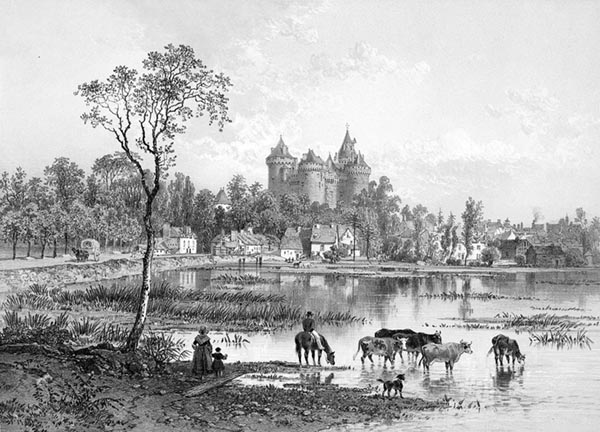
‘The Château de Combourg’ - Félix Benoist (French, 1818–1896), Eugène Cicéri (French, 1813–1890) and Adolphe Jean-Baptiste Bayot (French, 1810–1871)
Sitting on the grass, at the foot of an oak tree, we were reading René. We were beside that lake where he had once pursued the swallows, that now skimmed the rushes, over the meadows; and were seated amidst the shade of those woods where he had chased rainbows over the rain-soaked hills; we listened to the rustling of leaves, the lake-sounds borne on the breeze, which had mingled their murmur with the mournful melody of his youthful sorrows. As the shadows fell on the pages of the book, the bitter-sweetness of the writing seeped into our hearts, and our delight in its phrasing dissolved into something expansive, gentle, and melancholic.
Near us, a cart passed, its axles rattling over the ruts. We could smell the cut hay. We could hear the croaking of frogs in the marsh. We returned to our lodgings.
The sky was heavy; there was a storm all night. Amidst the flashes of lightning, the plaster facade of a neighbouring house was illuminated and glowed as if it were ablaze. Panting, tired of tossing and turning on my mattress, I rose, lit my candle, opened the window, and gazed out at the night.
It was black, and as noiseless as sleep. My lit candle cast a monstrous, enlarged silhouette on the opposite wall. From time to time, a silent flash of light suddenly blinded my eyes.
I thought of the man, who spent ten years of his childhood and youth at Combourg, and filled half a century with the clamour of his melancholy. I saw him in those peaceful streets, wandering with the village children, seeking swallows in the church steeple or warblers in the woods. I pictured him in his narrow room, sad, his elbow on the table, watching the rain run down the windowpanes and, beyond the curtain, the clouds passing, while he drifted in reverie; I imagined the long, dreamy afternoons he spent there; I thought of the bitter solitudes of adolescence, with their dizziness, their nausea, their bursts of love that render one heartsick. Is it not then that our pain was incubated, on that same hill of Golgotha where that genius, whose works nourished us, sweated out his anguish?
Nothing can describe the gestation of ideas, the tremors their future works cause to those great writers who create them; but we are captivated to see the places where those works were conceived, and brought to life, as if they retain something of the unknown ideal that once vibrated there.
Oh, his room! The child’s sad little room! Therein confused phantoms swirled, and called to him, tormenting his hours, demanding to be born: Atala, the magnolia flower quivering in her hair in the winds of Florida; Velléda (the druidess in ‘Les Martyrs’) in the moonlight, running over the heather; Cymodocée (the pagan Greek priestess in that same work) veiling her bare breast against the claws of leopards, and Amélie all white, and pale René!
One day, however, he left, he tore himself away, he uttered his farewells and never returned to the old feudal home. There he is, lost in Paris, mingling with other men; then, seized by anxiety, he departs.
Leaning over the prow of his ship, I see him searching for a new world, weeping for the homeland he is abandoning. He arrives; he listens to the roar of the waterfalls, and the songs of the Natchez (an indigenous people of Mississippi); he watches the water flow by on the vast, sluggish rivers, and on their banks contemplates the gleaming scales of snakes with the eyes of savage women. He abandons his soul to the languor of the savannahs; they pour out their native melancholy to one another, and he exhausts the empty wastes, just as he has drained his heart of love. He returns, he utters, and we are held captive by the enchantment of his magnificent style, with its regal arcs and its undulating, plumed, draped, storm-filled sentences, like the winds in virgin forests, colourful as the feathers of hummingbirds, tender as the moonbeams amidst the clover of chapels.
He sets off on his travels again; he departs, to stir the ancient dust with his feet; he seats himself on a rock at Thermopylae and cries: ‘Leonidas! Leonidas!’; he circles the tomb of Achilles, searches for Lacedaemon (Sparta), counts the carob trees of Carthage on his fingers, and, like the numbed shepherd who raises his head at the sound of a passing caravan, those mighty landscapes awaken as he traverses their solitudes.
Recalled, proscribed, then showered with honours, he will later dine at the table of kings, he who had once fainted from hunger in the street; he will be an ambassador, a minister, will try to hold the crumbling monarchy together in his hands, and, amidst the ruins of his beliefs, will finally witness his own glorification, as if he were already counted among the dead.
Born into a declining society, at the dawn of another, he became the transitional figure who, as it were, embodied both hopes and memories. He was the embalmer of Catholicism, and the champion of liberty. A man of the old traditions and old illusions, in politics he was nevertheless a constitutionalist, and in literature a revolutionary. Religious by instinct and education, he was the one who, before all others, before Byron, uttered the wildest cry of pride, and expressed the most appalling despair.
As an artist, he shared with those of the eighteenth century the perpetual constraint of its narrow poetics, which, constantly overwhelmed by the breadth of his genius, nonetheless burst at the very seams. As a man, he shared the melancholy of the poetics of the nineteenth century; he pursued its turbulent preoccupations, its vain seriousness. Not content with being great, he sought to appear grandiose, and yet that futile mania failed to obscure his true greatness. He certainly does not belong to the breed of contemplators who never immerse themselves in life, those masters with serene brows who possess neither century, nor homeland, nor even family. He cannot be separated from the passions of his time; they formed him, and he formed others. Perhaps the future will neglect to take account of his heroic stubbornness; doubtless the events and characters in his books will be left to immortalise his works, and their titles, in the name of the causes those works sought to defend.
Thus, it was that, all alone, conversing to myself, I remained leaning on my elbow, savouring the gentle night and happily basking in the cool morning air that refreshed my eyelids. Little by little, day was dawning; the candle’s black wick lengthened, its flame dying. The gable of the market hall was visible in the distance, a rooster crowed; the storm had passed; a few drops of water, however, fell on the dust of the street, leaving large round stains. As I was becoming drowsy with fatigue, I lay down again, and slept.
We left Combourg feeling saddened; the end of our journey was approaching. Soon this errant fantasy, which we had pursued with such delight for three months, would come to an end. One’s return, like one’s departure, has its sorrows, anticipated in advance, offering a last faint exhalation of the life one leaves behind.
Heads bowed, unspeaking, gazing half-heartedly at the empty road stretching out before us, we breathed the scent of green leaves, and swayed to the movement of the horse trotting in the shafts. On the uphill sections, when the wind picked up, we could hear a little bird or two chirping from beneath the foliage. We stopped at the village of Hédé (Hédé-Bazouges) to see the ruins of the castle, our guide to drink a glass of white wine, our horse to consume a peck of oats: to each their own sustenance.
All that remains of the castle is a part of the keep, and the razed outer wall, which still rises some seven feet above the ground and forms a kind of large amphitheatre that one circumambulates by walking on the ruins. From there, the unfolding landscape resembles a gigantic sheet of verdure, striped by the straight white lines of the roads, flat in the meadows, undulating elsewhere according to the rise and fall of the underlying hills. The sun shone, the trees were green, the air was blue; nearby a stream descended the slope, skipping from fall to fall over the pebbles.
We heard the sound of a passing carriage on the road; it was hidden by the trees, and we could only hear the hoarse squeal of its brake-shoe scraping the dust. At the bottom of the hill, it halted; I took out my lorgnette: it was a true travelling carriage, with a seat in the back, a maid at one end, a footman at the other, four horses, and two postilions, and was laden with leather trunks, boxes, cartons, and umbrellas hanging outside in their waxed leather cases. The yellow silk blinds were drawn; I failed to distinguish anyone inside. Who was it? Why were they travelling, passing by the ruins so swiftly without setting foot in them, through the delightful shade of the trees without looking out at them, and close to the running water without sitting for a moment to listen to its melody?
The footman, having raised the brake-shoe, climbed up behind once more; the two postilions cracked their whips, the carriage set off, receding, shrinking in size, as it sped down the long ribbon of road. For a while the sound of galloping horses echoed on, then faded, and finally died.
We continued on our own way. It was about two in the afternoon when we arrived at Rennes; lunch was over at the table d’hôte and we were obliged to wait for our plate of chops.
While strolling along the banks of the Vilaine in the evening, close to the bridges, we came across a kind of long caravan, entered by a double-railed stair, with small square windows with red cotton curtains along its body. The light from inside, passing through, reddened the heads of the crowd standing around; on the threshold of the van, a lean, youngish woman, scrupulously dressed, her forehead narrowed by black braids pulled back over her ears, holding a baguette in her hand, was yelping aloud, in a Provençal accent, recounting the dreadful struggle that had taken place on the Barbary Coast between a fearless sailor and a furious seal: he had, however, managed to capture the seal, had tamed it, and trained it; and it was there within, one could view it.
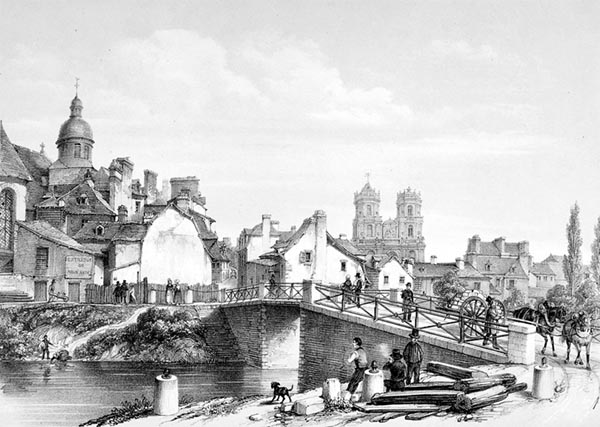
‘Rennes: the Pont Bagoul’ - Félix Benoist (French, 1818–1896)
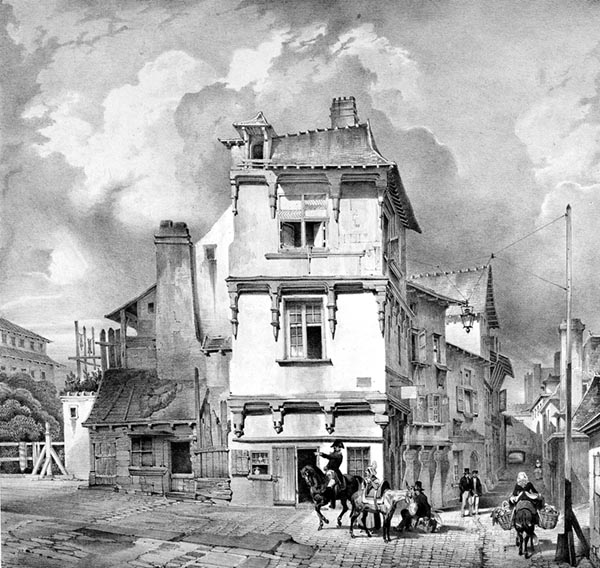
‘Rennes: Old Houses by the Pont du Cartage’ - Adolphe Jean-Baptiste Bayot (French, 1810–1871)
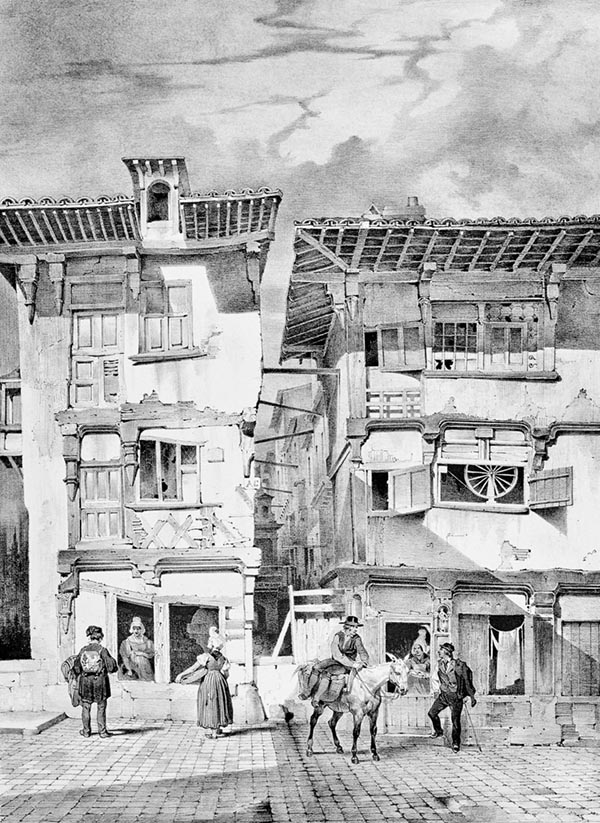
‘Rennes: Old Houses by the Pont du Cartage’ - Adolphe Jean-Baptiste Bayot (French, 1810–1871)
We entered and lined up around a large oblong tub, its grey-painted interior heightened with garnet-coloured bands of cloth to form a curtain. A lamp with a sheet-metal shade, above the tub, cast its light onto the yellowish water in which something long and black lay motionless. The woman approached and tapped it lightly with a stick; it poked its wet head out, its nostrils, like two symmetrical cuts in its skin, dilating and contracting noisily, and looked at us sadly out of two big black eyes. The seal wanted to move, but its tail struck the side; it turned on his back and showed us its white belly, still greasy with the viscous residues of seawater; it rose erect, rested its fins on the edge of the tub, touched its snout to its mistress’s cheek, then fell back to the bottom, letting out a great puff of air. It had lost the waves where it lived at ease, the wide beaches where it lay on the green seaweed in the sun!
Because it had performed for us, it was rewarded with a few eels which it swallowed slowly, gripping each one in the middle of the body, the two ends sticking from its mouth like two long pale whiskers on either side of its snout.
A barrel organ in a corner immediately started playing a polka, the oil lamp was flickering, on the stairs the woman was attracting a fresh audience, the performance was over.
That is all we saw in Rennes. When the seal has gone, what will be left to see there?
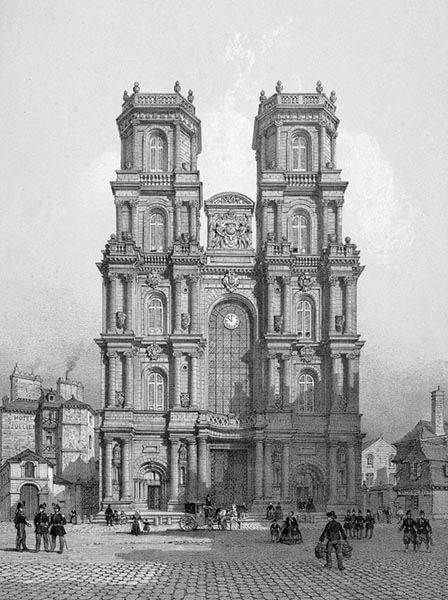
‘Rennes: Saint-Pierre Cathedral’ - Félix Benoist (French, 1818–1896)
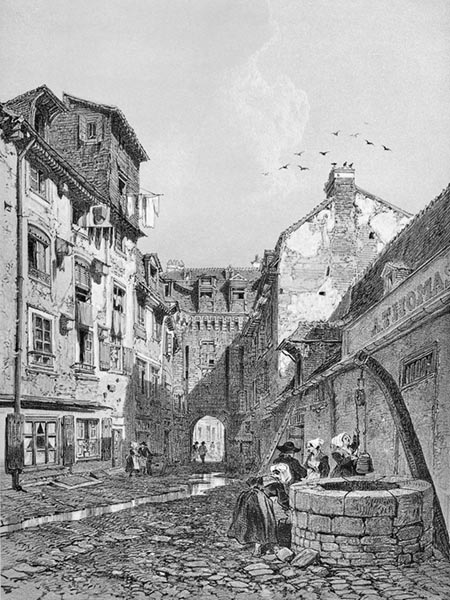
‘Rennes: the Porte Mordelaise’ - Félix Benoist (French, 1818–1896), Eugène Cicéri (French, 1813–1890) and Adolphe Jean-Baptiste Bayot (French, 1810–1871)
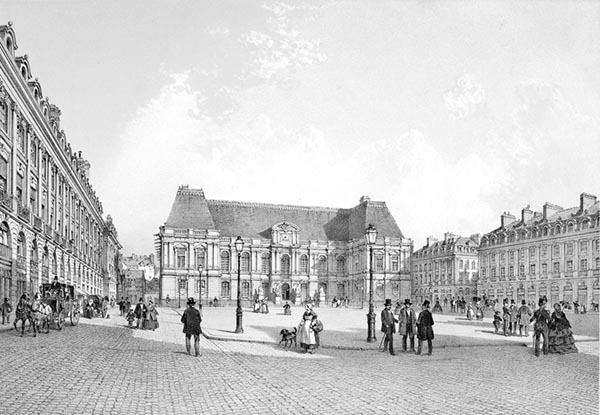
‘The Palais de Justice, Rennes’ - Félix Benoist (French, 1818–1896)
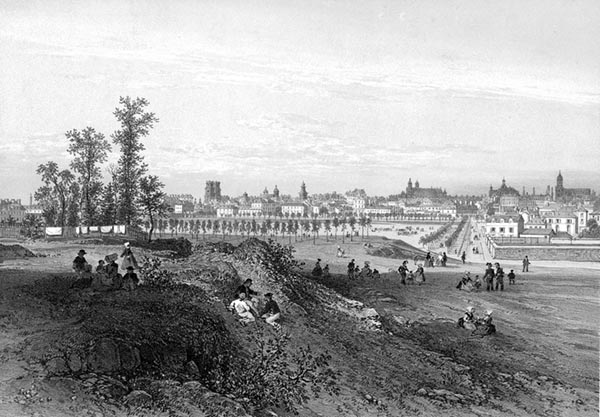
‘View from the Far End of the Champ de Mars, opposite the Station’ - Félix Benoist (French, 1818–1896), Eugène Cicéri (French, 1813–1890) and Adolphe Jean-Baptiste Bayot (French, 1810–1871)
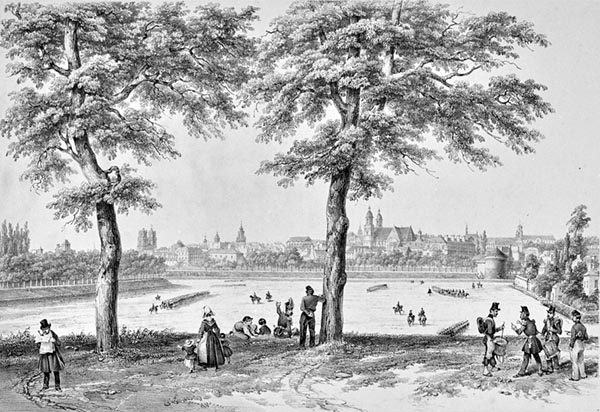
‘Rennes: View from the Champ de Mars’ - Félix Benoist (French, 1818–1896)
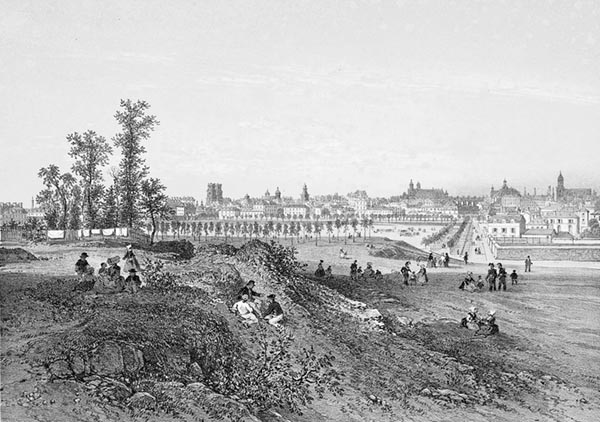
‘Rennes: View from the Champ de Mars’ - Félix Benoist (French, 1818–1896), Eugène Cicéri (French, 1813–1890) and Adolphe Jean-Baptiste Bayot (French, 1810–1871)
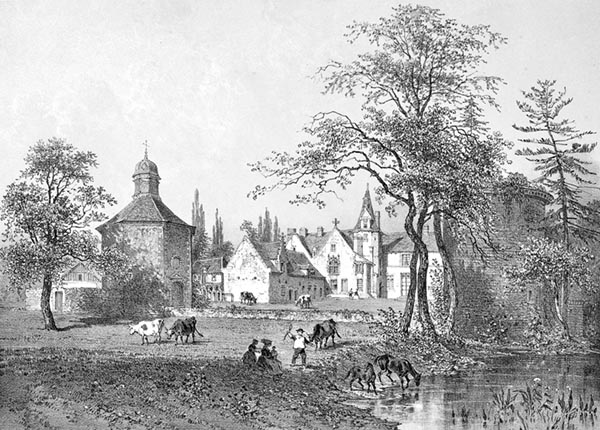
‘Rennes: the Château de la Prévalaye’ - Félix Benoist (French, 1818–1896), Adolphe Jean-Baptiste Bayot (French, 1810–1871) and Eugène Cicéri (French, 1813–1890)
Chapter XII: (Du Camp and Flaubert: The Return, Rennes to La Bouille, near Rouen.)
From Rennes to Vitré. — The stagecoach. — A very frivolous young girl who was fleeing from Rennes; yet another misdiagnosis of the situation. — Mild jokes about lancers, lances, pistons.
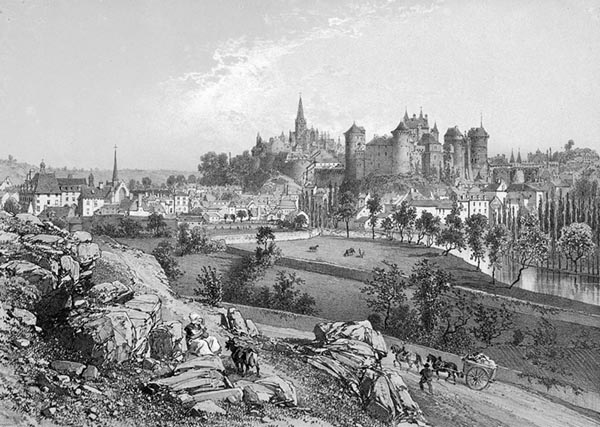
‘Vitré: General View’ - Félix Benoist (French, 1818–1896), Adolphe Jean-Baptiste Bayot (French, 1810–1871) and Eugène Cicéri (French, 1813–1890)
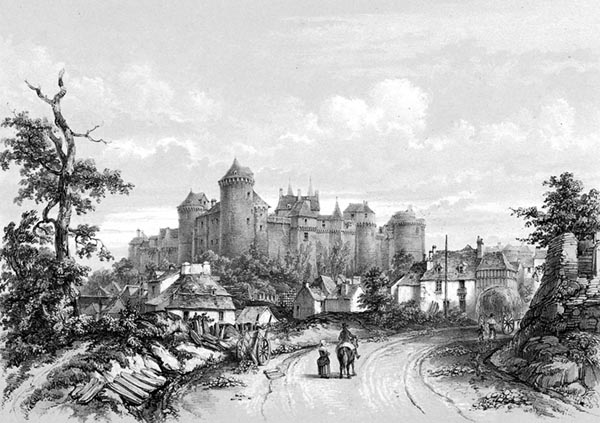
‘The Château de Vitré’ - Félix Benoist (French, 1818–1896)
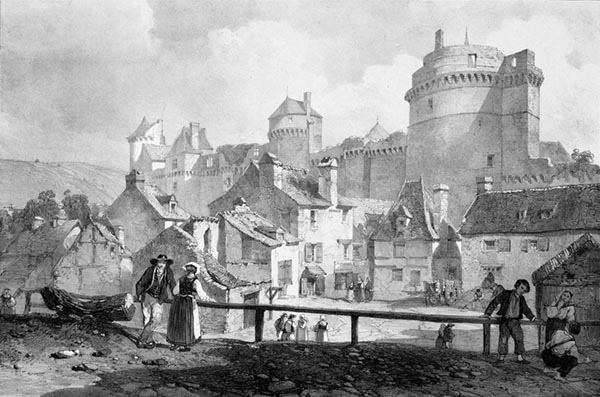
‘The Old Fortifications of Vitré’ - Léon Gaucherel (French, 1816–1886) and Eugène Cicéri (French, 1813–1890)
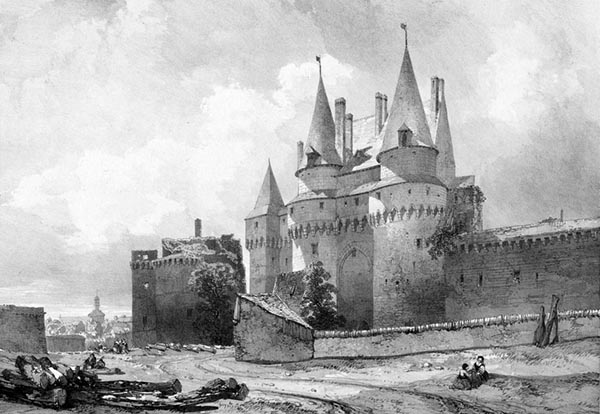
‘The Town Gate, Vitré’ - Léon Gaucherel (French, 1816–1886) and Eugène Cicéri (French, 1813–1890)
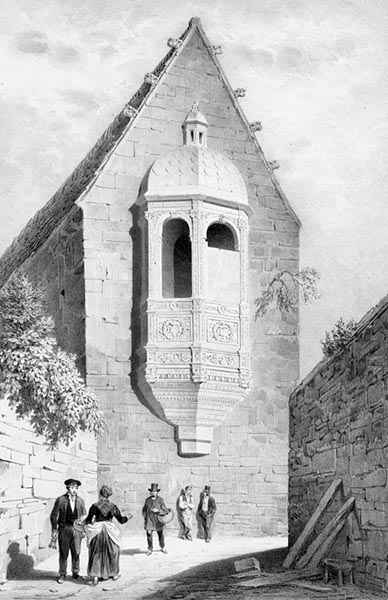
‘The Tribune de la Trémoille, Château and Prison of Vitré’ - Léon Gaucherel (French, 1816–1886) and Adolphe Jean-Baptiste Bayot (French, 1810–1871)
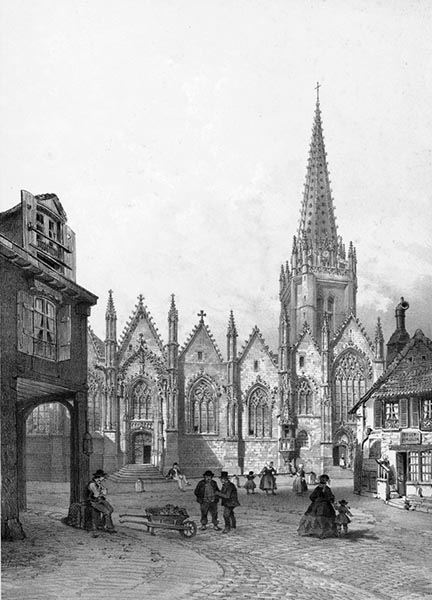
‘The Church of Notre-Dame, Vitré’ - Félix Benoist (French, 1818–1896) and Adolphe Jean-Baptiste Bayot (French, 1810–1871)
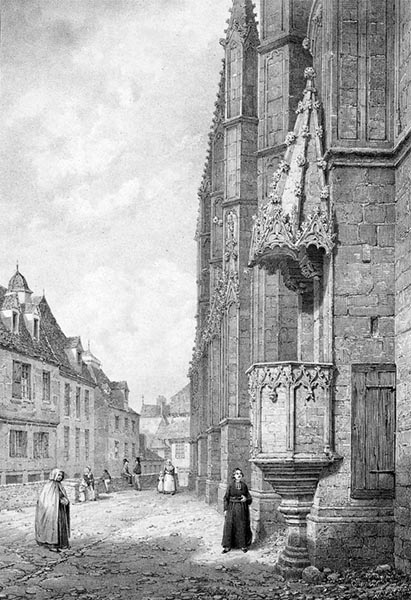
‘Notre-Dame de Vitré’ - Félix Benoist (French, 1818–1896)
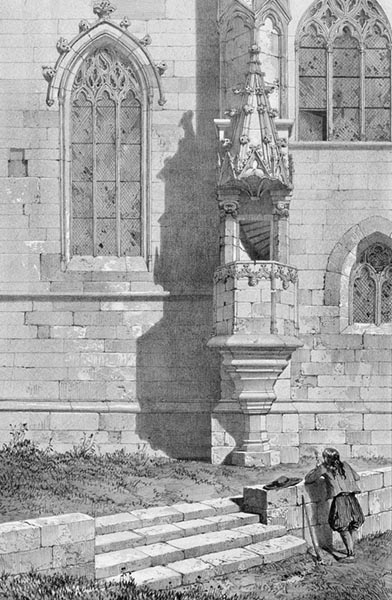
‘The Outdoor Pulpit of the Church, Vitré’ - Léon Gaucherel (French, 1816–1886)
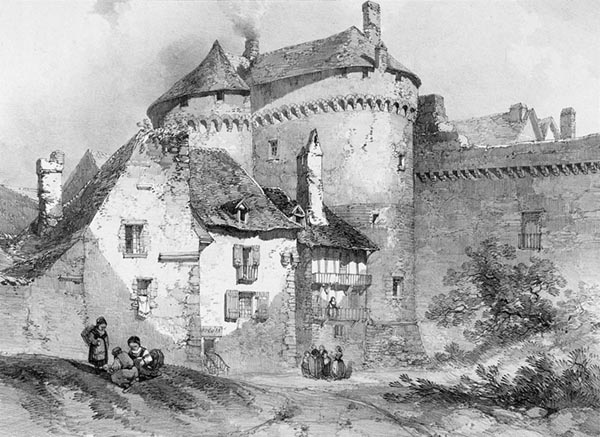
‘At Vitré’ - Léon Gaucherel (French, 1816–1886) and Eugène Cicéri (French, 1813–1890)
Vitré. — The moat in front of the Hôtel Sévigné, a large white building in which we lodged (built in 1750, between Rue Borderie and Rue Sévigné). — The old château (restored 1875 onwards): two towers with pointed roofs; to the left, a cluster of trees and a square turret; inside, a very wide well. — The interiors of the houses receive light from above; wooden staircases, angled sharply, like those in Morlaix and Rennes. — A rare sight; numerous towers along the former ramparts, now within the town. — A pretty road to Les Rochers, through the woods: there are no rocks at Les Rochers, despite the name. — The house L-shaped (the Château des Rochers-Sévigné, fifteenth century): the chapel rotunda, a decent kitchen. — The drawing room on the ground floor. — A portrait of Madame de Sévigné (Marie de Rabutin-Chantal, famed for her letters to her daughter Françoise-Marguerite de Sévigné) is certainly not the original by Pierre Mignard; several other portraits from the period are damaged. — Madame de Sévigné’s room: a gilded bed in red damask; the study, a painted porcelain dressing table, a low armchair covered in white and green tapestry cloth; a dressing table, red lacquer utensils, round boxes, a large white horsehair brush. — Rain, the lake, sheltering beneath the trees, and in the clog makers’ hut, the scent of the woods. — Table d’hôte: Monsieur Menars, Monsieur Marin, Monsieur de Couesnon.
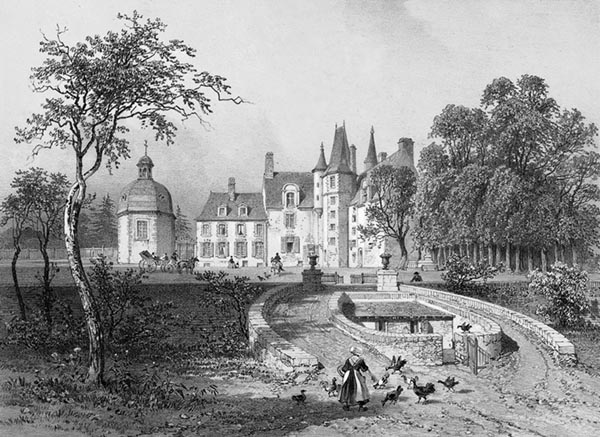
‘The Château des Rochers, near Vitré’ - Félix Benoist (French, 1818–1896), Adolphe Jean-Baptiste Bayot (French, 1810–1871) and Eugène Cicéri (French, 1813–1890)
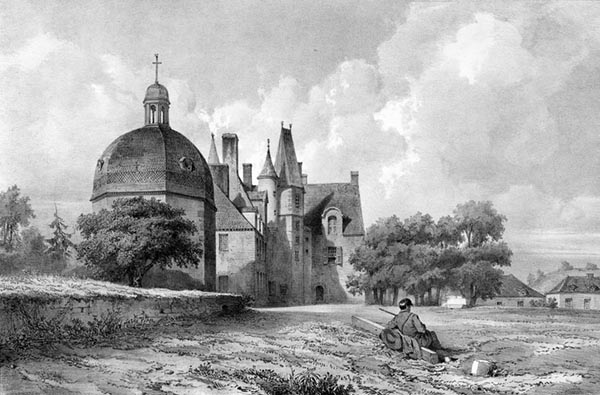
‘Les Rochers, the Home of Madame de Sévigné’ - Léon Gaucherel (French, 1816–1886)
From Vitré to Fougères. — On our way to Normandy. — Our driver tells us about the Marquis de Nétumières (Marie-Paul Hay), father of the current owners of Les Rochers, who threatened him with his pistol and ordered him to set the horses to the gallop, delighting in being overturned in his tin-plated carriage; he would dress up, among his friends, as a charcoal-burner. Vitré. — the outdoor pulpit (fifteenth century, on the south face of the Notre-Dame de Vitré church) as in Guérande.
Fougères. — Solid aspect of the towers, the ramparts are covered in greenery. — Only the part of the fortifications that descended into the valley remains. — A pretty gate with two towers; a large acacia tree, the waterfall; the towers are horseshoe-shaped like those at Saint-Malo. — Wide view of the esplanade below the church. — Forest. — Glass factory.
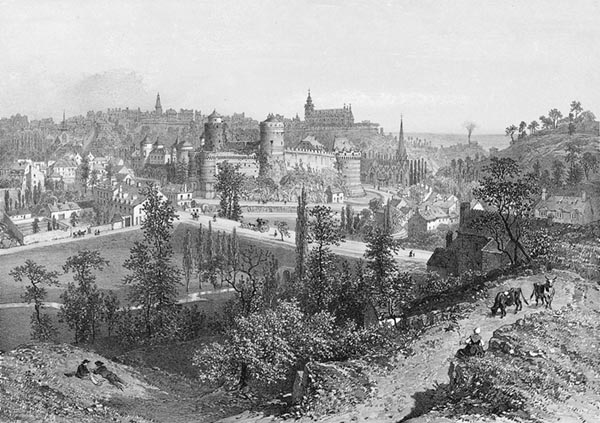
‘Fougères: General View’ - Eugène Cicéri (French, 1813–1890), Félix Benoist (French, 1818–1896) and Adolphe Jean-Baptiste Bayot (French, 1810–1871)
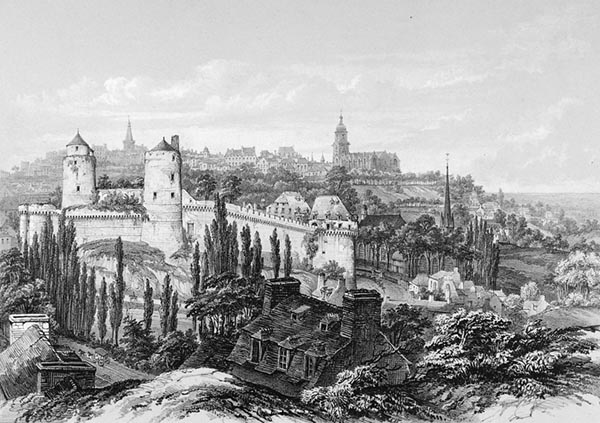
‘Fougères’ - Félix Benoist (French, 1818–1896)
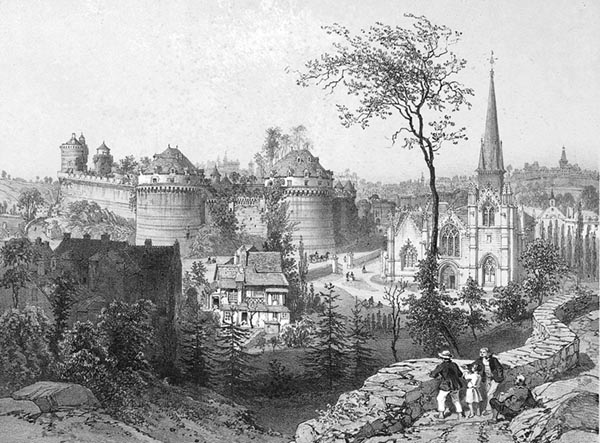
‘Fougères: the Château and the Church of Saint-Sulpice’ - Félix Benoist (French, 1818–1896), Eugène Cicéri (French, 1813–1890) and Adolphe Jean-Baptiste Bayot (French, 1810–1871)
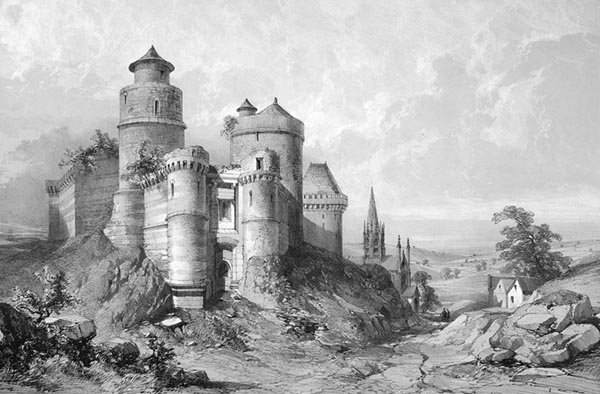
‘The Château de Fougères’ - Eugène Cicéri (French, 1813–1890)
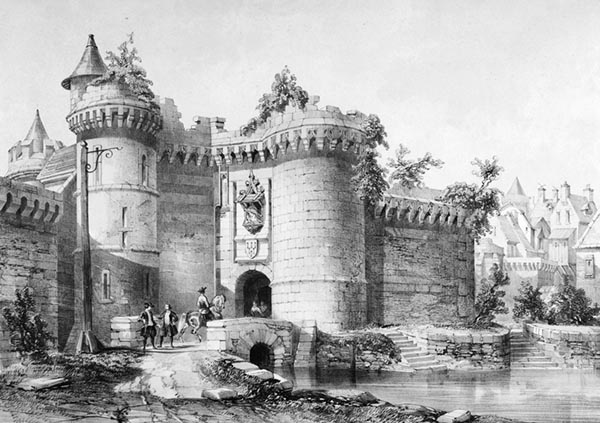
‘The Tour Pleguen and the Gate, Fougères’ - Eugène Cicéri (French, 1813–1890)
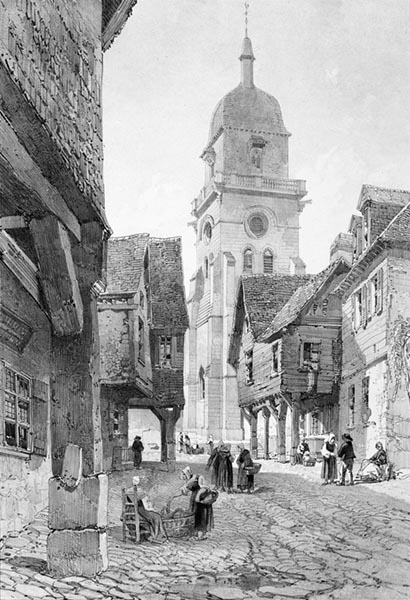
‘Fougères’ - Eugène Cicéri (French, 1813–1890) and Léon Gaucherel (French, 1816–1886)
In Vire (Vire-Normandie), even in Mortain (Mortain-Bocage), cotton caps start to appear. — By stagecoach at night, the grey day breaks, patches of silver in the matte-blue sky, then banks of gold pierced by the steeples of Caen. — A walk in the meadows; the racecourse. — The Abbey of Saint-Étienne (Saint Stephen’s, Caen): superb Romanesque; the arches of the upper galleries very wide, pretty capitals on the nave’s rounded columns; in the choir: archivolt, ornamentation of a staff passed through rings; a man (in one of the side aisles, on the right towards the middle) fouling himself (?). — Église Saint-Jean: Gothic, low, heavy, crystal chandeliers in the choir give animation to the church, which leans to the left, especially the entrance, supported by the neighbouring walls. — Église Saint-Pierre: an ugly vault because of the exaggerated interlacing of the ribs, especially at the apse where arabesques traverse it; The mix of square Renaissance shapes of the lamp bases with ogival shapes is jarring.
Nothing could be worse than the statue of Louis XIV in the Place Royale, stark naked, with a helmet and a sword. — The superb effect of the ‘Palace of the University,’ (destroyed in 1944) with its faculties of law, medicine, literature, etc. — Nothing of interest in the Natural History museum. Viewing provincial collections, one can’t help but regret the waste of money. — A bust of Jules Dumont d’Urville (naval officer, explorer and cartographer); always the famous local man is celebrated! Here, because he was from the Condé-sur-Noireau region.
Caen Museum. — The Marquis d’Argenson (the politician, Marc-René de Voyer de Paulmy) who died in 1721: a large black wig, collar, markedly black eyes and eyebrows, a slightly hooked nose, strong nostrils, discreet mouth, cleft chin, and ironic look, though more cunning than mocking; all the gravity is in the lower part of the face.
The Second Revelation of Saint Catherine, said to be by Albrecht Dürer but it seems earlier to me, more colourful: the Virgin and the Saint, long hair, red, fine and wavy at the ends and falling to their waists; two other women in the foreground, redheads, of the latter the one on the right, seated, her large red dress spread out in heavy folds; the one on the left, a greenish dress, seated, a yellow bodice, a red mantle with ermine collar; in the background, landscape, a house, an old servant in a hood bringing fruit.
A Portrait of Madame de Parabère (Marie Madeleine de La Vieuville, Marquise of Parabère, the official mistress of Philippe II, Duke of Orléans) surrounded by a garland of flowers: a Black African below in yellow sleeves; Madame de Parabère, black hair, naturally curly at the front, loose, spread over the shoulders, her clear, round face, small mouth, small nose, jovial and mischievous air, blue eyes, blonde eyebrows; the portrait is by Antoine Coypel, the garland by Fontenay (Jean-Baptiste Belin de Fontenay the Elder who specialised in flower-painting).
A fine portrait of the Magistrate of Tournières: in a wig, animated, ugly, thin, narrow, red eyes, the soft flesh of an old man, the hair a false blond colour; the fellow must have been to the law what Nicolas Boileau was to literature; the animation of the narrow pupil with white sclera (of that eye on which the light falls) shining brightly, the iris blue.
Gustave’s comments on our return now follow:
We left Caen after dinner at six p.m. in a tilbury. — A long walk along the water’s edge under trees, very dreary because of the greenish light; through the populated countryside; a village. I (Gustave) sensed I was approaching Trouville-sur-Mer. Without knowing my surroundings, they felt familiar, and iam redibant multa praeterita (many things of the past were returning). — The ferry crossing; the little white horse, a bit skittish, was afraid.
Dives-sur-Mer. — The drunken veterinarian. — We filled our water-bottles and departed. The moon shone, far away, in the distance. Over the sea, the lighthouse of Le Havre; we climbed the Houlgate cliffs and lost our path; crossing a field, scrub, poor ground. The moon lit our way, and led us astray, unseen gullies soaked the ground, into which we sank; finally, after much trouble and effort, we reached the shore. — Low tide, the reddish-brown sand. The moon, low above the heights behind us, extended our shadows at our sides; it shone brightly. Phosphorescence in the puddles; they glittered round our shoes as we stepped in them. We were quieter than the night and darker, it being serene and gentle. For a moment, an overwhelming dread of Nature; we barely exchanged a ‘Well, my friend’ from time to time, the sound of which immediately faded. Sometimes the shadows grew longer; once a group of customs officers approached us with that peculiar look one gives others when meeting at night. We asked them if we were far from Trouville. — A boat containing fishing nets. Max was exhausted; I was thinking of those good November days of which the boat reminded me. Five years earlier, at the same time, on a similarly warm night, I had walked to Trouville all alone. Day was breaking, and I was in the process of returning; but this time not to join the family there, or seek to win back affection; but to memories only, feeling for the place itself only a kind of bitter hatred. (Flaubert’s father had died in Rouen the previous year, in January 1846; his sister Joséphine Caroline in March of that year)
Lights on the quayside. — The customs officer conducting his inspection, his little dog prowling around. — Marshland. We travel amidst the rushes, finally reaching the light on a post, which had seemed ever receding. Max waited while I went to rouse the Touques ferryman, who woke, and reluctantly agreed to ferry us across; I had trouble recognising myself on the jetty. On entering the house, father and mother David failed to know me; they had to be reminded. Do we truly recognise one another? Do we know ourselves! We drank a bottle of wine; we ate some cheese from Pont-l’Eveque. — The kitchen! An armchair. — Enter a gentleman in a grey frock-coat and riding boots.
The next day, courtesy of L… on horseback to Bonneville-sur-Touques and Saint-Arnoult: at Bonneville they are demolishing the old house and building a new one; I used to take lovely rides there with Alfred (Paul-Alfred Le Poittevin, the philosopher and early friend, who died the following year, in April 1848). — Ladies, for whom I picked bouquets. — At Saint-Arnoult, carriages at the corner of a hedge. Many houses have been built there, a road laid; in the chapel, a vault was discovered containing many bones, and the chancel has been repaired! In the ruins of the church (the priory chapel, stands next to the church which has been partially restored), the same trees, the same pillars that were here when I used to visit to practise my drawing with Father Dumée; that, at least, hasn’t changed. Returning to the road, I recognised the priest from Touques: ‘You, young people from Paris, and your fancy suppers.’ Opposite, the oyster beds, a fine horse-drawn carriage with a high seat, driven by some old general in a straw hat, adorned with his medals; a sideways flick of the whip. — All has changed, all, all; I am having trouble finding my bearings, and my memory is shaken by the changes in the very surroundings to which it has clung. The ground itself slides from beneath our feet; it’s not just hearts that change, the ground too, the houses, the paving stones. Oh, my poor little chalet, and the other two houses, how you have altered, especially the one, the dearest one. In the dining-room, I recall other tables; the wallpaper now depicts scenes from The Bride of Abydos (Byron’s poem of 1813). A strange thing: it seemed to me that, long ago, the setting sun shed its reddened rays into the far left corner; the memory is quite clear. Could the sun have altered its course too? No, it was the reflected light, then, from the sands at low tide, whose colour illuminated the windowpanes. — A race to the chalet. — Our friend Ulric (Ulric Guttinguer, the poet and novelist, born in Rouen). Here’s a man who, after having done ..., has returned to the respectable bourgeoisie; thus, the bourgeois life is at the end of all!
Criquebœuf, which we do not enter; Villerville, which we merely traverse. We lead our horses down the customs officers’ path. — Dinner at Monsieur Guetier’s; an evening stroll (with them!) along the beach; the next day, lunch where we drink because we are obliged to, and it is offered for the same reason. But how sad and foolish it all is! How little it means to me! And the rain that fell and lasted all day, how perfectly it resonated with my every feeling!
Honfleur. — Rain on the docks. — Dinner; I surpass myself in making a custard sauce. I recognise the faces of the servants I had forgotten, just as, next morning, I recognise the faces of two oarsmen in the rowing boat. To recognise someone whose image you have completely lost is always to rediscover something of yourself; you say to yourself: ‘Ah, that’s right, I possessed that once… I lost it; I’ve reclaimed it; ah!’
Aboard the Seine steamboat, the priest, with waxed paper on his hat, was chilled and unwell; I tried in vain to warm myself by the boiler. The image of the accountant from the ‘Normandie’ had also slipped my mind! Another then who has reappeared! — The harpist, and the guitar player: the former’s ugliness was astounding and gripping; all I discerned in their songs was love, happiness, etc. Two nuns nearby had left, no doubt for fear of being disturbed, of libidinous images coming to mind. Ah! Those poor girls caused few to come to mine. — Lunch. — It’s strange, but I wasn’t bored on the steamboat.
Between Caudebec-en-Caux (on the Seine) and Duclair, I think, I recognise a spot, a hollow on the left bank, between two little wooded hills, and remember that, once, on an Easter trip in 1841, with Caroline (Joséphine Caroline), my mother, and Mademoiselle Jane, we were there on the port-side rail, chatting with the woman from the restaurant, and three young men who perished in the Meudon railway disaster (the fatal accident, at Meudon Bellevue, Paris on 8th May 1842, the worst rail disaster of the nineteenth century). It was cold and around six in the evening; in April there was almost no one on board; it was one of the first trips of the season.
I thought back to a steamboat trip downriver from Les Andelys to Rouen with Alfred: we were tired, dusty, and sad as I am now, but then without cause; the thin voices of the two women, the woody resonance of the guitar, the metallic sounds of the harp vanished, were drowned by the noise of the wheels, and that of the water split by the prow; the movement of the steamboat brought all back.
La Bouille. — In the evening, Maxime collects my notes, and the next day, farewell.
Written at Caumont (downstream of La Bouille), July 28th, 1847, Wednesday evening, 9:30 pm to 11 pm. — A year ago, in Paris, the July festivities and their fireworks, seen from the heights; I was carried away by emotion, I am experiencing the same feeling now; there is a harmony in this anniversary.
The End of Part IV, and of ‘By Field and Shore’