Tendresses
Poetry from the European Languages
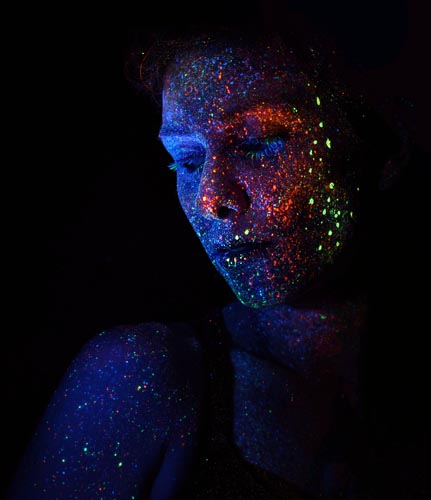
Jill Heyer, Unsplash
Contents
Sappho
‘The Muses have filled my life'
‘Stand up and look at me, face to face’
‘And then Love shook my heart’
‘He’s up there with the Gods’
‘I have a daughter, golden’
‘Hesperus, you bring back to us’
‘The Moon is down: the Pleiades are gone’
Catullus
Sirmio
‘Ave atque Vale’
Lesbia’s Sparrow
Dante
Sestina
From the Vita Nuova:
- Love and the Gentle Heart
- There is a Gentle Thought
Petrarch
‘Diana was never more pleasing to her lover’
‘Now that the wind and earth and sky are silent’
‘Through the heart of the wild and inhospitable’
‘From what Idea, from what part of the skies’
‘Filled with consuming thought that divides me’
‘The eyes of which I spoke so warmly, the hands’
Goethe
Roman Elegies I
Mignon
Venetian Epigrams I
April
Leopardi
The Infinite
To Silvia
To the Moon
Pushkin
To ----
The Talisman
‘I loved you’
‘Bound for your distant home’
Heine
The Asra
Death
A Palm-tree
Death and his Brother Sleep (‘Morphine’)
Baudelaire
The Invitation to the Voyage
For Madame Sabatier
The Balcony
Mallarmé
Album Leaf
Autumn Plaint
Sea Breeze
Mandelstam
Tristia
Sisters
This
Petropolis
Machado
From – Fields of Soria
To Jośe Marίa Palacio
From – Passageways
From – Songs of the High Country
About This Work
This text is a set of translations of lyric poetry in the European languages. The choice is personal. The poems have been selected to reflect the stream of tender, secular, humane thought and feeling, that permeates the European tradition but is rarely explicitly commented on or understood. Life-affirming, and therefore sometimes subversive, it flows from the roots of the Greek and Roman experience. When poetry loses sight of it, in the end it suffers for it.
Its main subject is love, but not merely sexual love. There is also love of relation and place, of thought and things. It is love of landscape and person, of creatures and skies, of brother for brother, and friend for friend. Its origin is in that common humanity expressed by the Paleolithic peoples in their painted caves, and the Neolithic peoples in their figurines. It is love, beyond and before any way of thought. It has in it sadness at transience, and delight in the flux of existence. It affirms at dangerous times and in the most difficult of places. It has no labels, except that of ‘being human’. Its concerns are core to us and therefore they last, and they speak across the centuries.
Here there are a number of great writers represented by a few poems. The author hopes that the reader either knows or will search out the deeper richness of the writers’ works, and all the other poetry of our common tradition. I have included only minimal biographies, but every writer translated here is fascinating as a person and worthy of greater investigation. Many of them lived at critical moments in Western Civilisation. Some of them bore witness to the worst of times.
Translation is a remaking in an alien language of something perfect in its own sweet native tongue its ‘douce langue natale’ as Baudelaire has it. Its deficiencies are obvious, its merit is that it makes accessible what we must know, and teases us into acquaintance with the original. What counts is the outcome. If it sings, it sings. If it dies in the translation, no retelling the painfulness of its creation will matter a jot. I have changed metre, word order and rhyme, and in a very few cases changed content in order to aid sense. Where metre did not work I have accepted it and produced a free verse alternative.
Translated by A. S. Kline © Copyright 2000 All Rights Reserved
This work may be freely reproduced, stored and transmitted, electronically or otherwise, for any non-commercial purpose. Conditions and Exceptions apply.
Last Modified 06/11/2010